Articles by G van Londen, MD

Dr. van Londen is a cancer provider/medical oncologist and a cancer survivor. Born and raised in The Netherlands, she has migrated to the USA where she completed a medical residency, as well as fellowships in medical oncology and geriatric medicine. She has practiced medicine in the USA for nearly 20 years at a large health care system in Pittsburgh, PA, USA. Her background has prepared her to handle diverse and complicated cases. She specializes in: 1) Treating newly diagnosed, older breast cancer patients by performing a geriatric assessment and creating a personalized, multidisciplinary treatment plan that aims to respect patient’s preferences and desire for independence. 2) Cancer survivorship care to prevent/support the late/long-term post-treatment needs of cancer survivors of any gender and tumor type (and their caregivers). Together with a village of various supportive care providers, she performs clinical, research, and educational activities to empower cancer survivors (and their caregivers and providers) to support the post-treatment emotional, physical, and functional needs of cancer survivors. The content of this domain is protected. Entries and replies are not endorsements. Views are mine. No COI.
Cancer: Why Me? Why Now?

Cancer: Why Me? Why Now?

Many of my patients understandably wonder and ask, “Why did I get cancer?” I do not necessarily have a medical or scientific answer. I wonder if the question behind the question is, “Why me?” From that question comes others: “Why now? Can it happen again? What can I do to prevent that?” 

There are certain risk factors that predispose one to cancer. These factors (including genetics, environment, and lifestyle) are also associated with poorer outcomes for certain patients. However, there is not always a cause-effect relationship. 

My late mentor taught me a simple way to explain the different levels of cancer risk; it can also be applied to those who carry a cancer diagnosis. On the one end is the general population for whom gender/age appropriate cancer screening guidelines apply. On the other end are those whose families transmit the cancer gene. For this group, we have proactive and comprehensive approaches to try to decrease the risk. Lastly, is the in-between group whose cancer risk is unknown. These are people who have had one cancer diagnosis. This puts them at an undefined higher risk than the general population to get another cancer, but at lower risk than those who harbor the cancer gene. (Unfortunately, data is lacking for those “in-between” individuals, so we resort to general population guidelines). 

Even though we are in the 21st century, nature and our bodies remain a mystery with many unknown variables. Sometimes we just really don’t know why cancer happens to you or why it happens when it does. Questions that probe the why are good, though. Our why questions reflect how we cope with our diagnosis and try to make sense of it. They indicate our curiosity to try to understand the mystery of life. This is healthy as long as we acknowledge that life’s mystery is one that likely won’t be unraveled entirely for another few generations, if ever.

A cancer diagnosis never comes at the right time. (If not now, when?) It can happen to anyone. (If not you, who?) As the current pandemic teaches us, we are not invincible or immortal. Life is not fair. Embrace your curiosity and let it empower you without letting it overwhelm you. 

Be kind to you and others….

Thank you for visiting me. Remember, I share ‘extra treats’ if you follow me on FacebookInstagramTwitter, or Pinterest! Plus, you can get notified of a new posting by subscribing to our newsletter!

Please help by nudging us if you encounter technical problems.

Cancer – Embracing Our Emotions

Cancer – Embracing Our Emotions

Many of you may feel like being in the midst of this pandemic has you stuck between a rock and a hard place. What’s worse — delaying cancer testing/treatment or risking Coronavirus exposure? Having to choose between two evils, you must try to anticipate and minimize your risk. 

Medically speaking, this is unknown territory, so I strongly recommend that all of you make decisions about your personalized cancer care with your medical oncologist. Here is a resource that may help to facilitate your communications. 

There is a reason we have a spectrum of emotions that can range from fear, sadness, anger, and sorrow to happiness and joy. There is no need to put up a facade and deny any of these feelings. Doing so may make things worse and make us feel fragmented. Allowing all these feelings to coexist and being in touch with them will facilitate integration, healing and inner peace. I had previously outlined a few examples of mature coping styles, but only you know what will soothe you most. If emotions are causing you or your loved ones debilitating pain or dysfunction, please reach out for help! 

I think the trick is not trying to keep the joys and the tragedies apart but you kinda gotta let them cozy up to one another, you know, let ’em coexist. And I think if you can do that, if you can manage to forge ahead with all that joy and heartache mixed up together inside of ya — never knowing which one is going to get the upper hand — well life does have a way of shaking out to be more beautiful than tragic.

Dr. Nathan Katowski (by Gerald McRaney) in This Is Us.

When you are aware of all your feelings, you can choose how to approach and act on them.  Embracing fear without letting it paralyze you, but allowing its energy to cautiously propel you forward can help you to express the best version of who you can be so you can love and honor yourself and the world. The hope is that a new (and better) normal will be born out of the Coronavirus tragedy — at global, national, local, and personal levels! 

Thank you for visiting me. Remember, I share ‘extra treats’ if you follow me on Facebook, Instagram, Twitter, or Pinterest! Plus, you can get notified of a new posting by subscribing to our newsletter!

Please help by nudging us if you encounter technical problems.

Cancer and Coronavirus Disease 2019 (COVID-19)

Cancer and Coronavirus Disease 2019 (COVID-19)

How are you? Really…?! It has been a brutal week for many. For me too, as a loved one, friend, and provider, but also as a patient, as my surveillance testing has been delayed by a few months.

Like you, I find myself homebound, trying to find a new normal for the time being.

I thought I would write a quick post for not only cancer survivors, but those who find themselves in the midst of the Coronavirus Pandemic.

  • General Coping Strategies:
    • Be kind to yourself and others. There is not one normal emotional reaction to a global (and terrifying) crisis like this. It affects all of us differently. If you have been traumatized before then these same thoughts/feelings can be easily triggered by other overwhelming experiences like this epidemic. And for some of you, your treatment regimens may be changed around. Please know that organizations and institutions do not make these decisions lightly. They look at each situation on a case-by-base basis and strive to minimize the impact on the patient’s health outcomes. Being stuck in this state of uncertainty between two life-threatening choices, a rock and a hard place, is an impossible place to be for anyone. Please remind yourself that we are all unique. Allow yourself time to transition, to become aware and experience your feelings on your own and/or by talking with others. If you feel the walls are closing in on you while you are quarantined — no pun intended — or if you are experiencing financial stress, please rise above your feelings of shame or guilt, and reach out for support! 
    • Educate yourself by following reputable resources that are updated frequently to respond to this rapidly-evolving series of events, such as the ones listed above. Information can be comforting and empowering. Following the recommended preventive measures may give us a sense of control and togetherness. However, don’t let information consume you. Too much information may result in anxiety and panic. 
    • Keeping a physical distance does not have to result in social isolation! However, nothing can replace the in-person experience of a major event (such as a wedding, funeral, or even a moment the passing of a loved one). This can be heartbreaking and soul-crunching. These once-in-a-lifetime moments have been taken away by a force de majeur. No one can control this. You will never forget the pain of not being able to be there, but hopefully the passing of time will allow the sting to become less intense. Modern communication tools, including a landline, are there to allow us to safely connect with others and to creatively still be able to commemorate a special event. 
    • Distract yourself from your negative thoughts with everything from necessities (such as chores) to fun activities, in solitude or with others. Perhaps now is the time to connect with a person you have been meaning to call for a long time or to pick up a hobby that your life ordinarily has no space for. Even try doing absolutely nothing. (It’s hard to do. I challenge you!) The silver lining of this terrible time for our world might be that you have the opportunity to pursue new experiences that you may want to continue even after the pandemic has dissipated. 

I wish you all the strength you need to endure the following few weeks to months. Be kind to yourself and others….together we stand strong! 

Thank you for visiting!   

Please help by nudging us if you encounter technical problems.

Cancer and Loneliness

Cancer and Loneliness

Currently, our society is engaged in social distancing to minimize Coronavirus’ footprint. Many of us are spending more time at home which can help us to rekindle our connections with our loved ones, but some of us are lonely. Elderly people may not have or know how to use devices that would allow them access to social media, FaceTime and the like. And even if you are able to stay in touch electronically, it’s not the same as having a physical, personal interaction. 

This made me think about cancer survivors (and their caregivers), many of whom may be alone at some point in their journey. This solitude may serve a purpose for many, but there’s a thin line between solitude and loneliness, which reflects a state of suffering and sadness due to lack of company

As a cancer survivor or caregiver, you may withdraw into yourself for a number of reasons. For instance, it may help you to process your thoughts and feelings and get ready for the overwhelming new situation that you have on your hands. Another reason could be self preservation; you may not want others to see you at your most vulnerable. Keeping up a facade to protect others from your feelings and thoughts or the severity of your situation may be another reason. Also, it can be distracting to have to navigate the reactions of others around you if you barely have enough reserve to keep yourself going.

However, it takes two to tango! People around you may give you more emotional or physical space than you need. They may want to avoid ‘bothering’ you. They may not know how to be of any help or what to say. They may not want to cause hurt by saying the wrong thing or introducing infectious organisms. But it can also be due to the fact that those not affected don’t want to physically contract cancer or have their perfect life stained by the perceived misery.

The reason for my outlining the different reasons for loneliness is that it may help you to gain insight into the potential drivers behind your behavior, which can prevent misunderstandings and allow you and your loved ones to communicate more openly and respectfully with each other and health care providers, and therefore act with more intent and purpose.

Thank you for visiting me. Remember, I share ‘extra treats’ if you follow me on Facebook, Instagram, Twitter, or Pinterest! Plus, you can get notified of a new posting by subscribing to our newsletter!

Please help by nudging us if you encounter technical problems.

Cancer and Intimacy

Cancer and Intimacy

Sexuality plays an important role in society, facilitates reproduction, and helps us to feel connected to our partner as well as to ourselves. When you are told that you have cancer, it can affect the desire of either or both partners. For some people, desire decreases (as they are distracted and not in the mood), while for others physical intimacy may sooth or provide welcome distraction.

Cancer therapies can affect sexuality in many ways. Qualitatively, your routine sexual act may need to be adapted due to anatomical changes (e.g. pelvic or breast surgeries) or functional changes (e.g. erectile dysfunction, vaginal dryness or scarring). Quantitatively, the frequency and duration of sexual acts may change, usually lessening. Reasons for the latter can be due to the experience of pain, discomfort, shame, or guilt, but also because one’s desire may be decreased when going through premature menopause/andropause, anxiety, or depression.

Oftentimes, I see couples, whether in brand-new or long-lasting relationships, in which I sense that both partners are longing for a connection but are not communicating about this out of concern for disrespecting or hurting the other. Finding a safe environment for this communication may help healing to begin. Also, it may encourage a cancer survivor to feel confident enough to talk with a health care provider to find if there is anything that can be done to improve matters.

There are medications and devices that can improve, if not resolve, anatomic/functional deficits. (As a gentle reminder, hormone replacement therapy is not an option for those who are survivors of tumors that are fueled by hormones.) Talk- and/or pill-therapy can emotionally support partners.

However, at the end of the day some things may not be fully restored to the pre-diagnostic state. Some emotional and physical scarring may be permanent. In these situations, partners may have to work harder and be more creative in finding ways to connect with each other in ways that are enjoyable, pleasurable, and satisfying for both. In addition to intimacy, identity and security can also be altered by cancer. Therefore, even couples who have been together for a long time may need to reset and rekindle their relationships. Keep in mind that sexuality is one form of physical intimacy. You may want to explore other forms of physical intimacy, such as sensuality and eroticism.

There are many other ways of being intimate that can enhance or compensate for the impaired ability to connect physically. Examples of these alternative forms of intimacy are emotional (connecting with someone else in spoken or unspoken ways that express your love), intellectual (participating in communication about a topic that both parties are passionate about), and experiential (sharing activities and making memories together).

Enjoy connecting!

Thank you for visiting me. Remember, I share ‘extra treats’ if you follow me on Facebook, Instagram, Twitter, or Pinterest! Plus, you can get notified of a new posting by subscribing to our newsletter!

Learn & Think, Live & Feel:

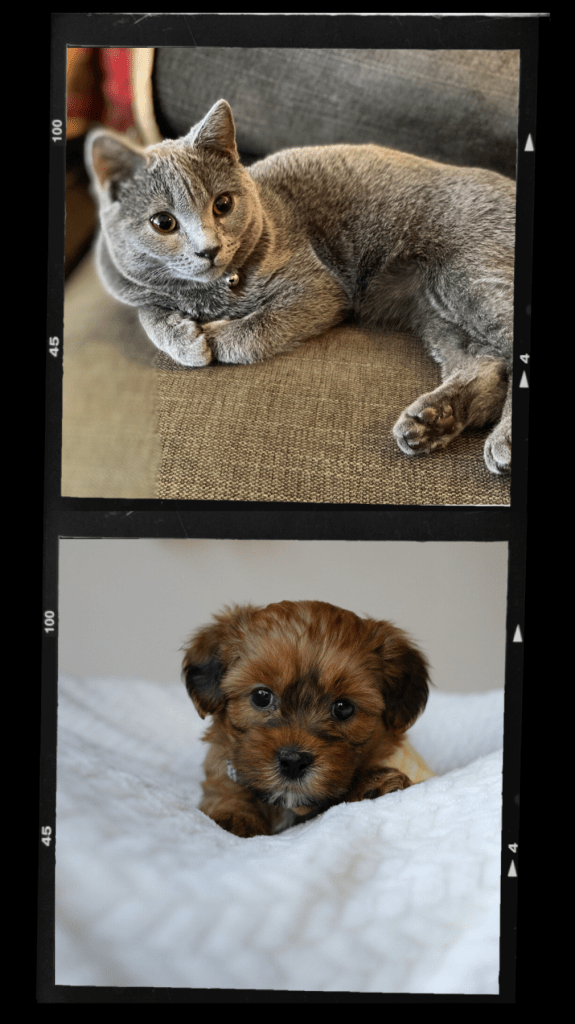
My family decided to go all in. For years we have held ourselves back due to various issues including active or anticipated medical issues. Recently, we decided to get some more love in our house. A month ago, we expanded our family to include our beloved cat, Melky. In another month, we will be expanding again with a dog, Cookie. We are fully aware that having a pet may bring more responsibilities, worries, and expenses, so we have backup plans in place, but we do not want to miss out anymore on the therapeutic joy pets can bring. Stay tuned for our adventures!

Please help by nudging us if you encounter technical problems.

Focus on the Journey

Focus on the Journey

Recently, I heard a speaker discuss the concept of “horse racing” in context of an academic setting where one’s career progress depends on one’s ability to compete at the national and institutional levels for recognition of one’s worth and legacy (grants, papers). It struck me that the same concept happens to some degree in our society as a whole. We often find ourselves in an exhausting rat race where luck comes into play. We all strive for a delicate balance between fitting into society’s mold and standing out from the crowd. A certain degree of peer pressure is healthy, but no matter how hard we try, success is not a guarantee. Many factors are outside of our control.

A cancer diagnosis may impede one’s ability to perform and compete due to lack of time, energy, or motivation. Plus, cancer survivors may find themselves in an additional race with life that may lessen their sensitivity to judgment and societal pressures. This may have its own anxiety-inducing aspects, initially. At the end of the day though, the race is never completed. Sometimes we change our definition of success. At other times, we realize our goals are unrealistic or that there are bigger and better goals to achieve. Realizing it’s about the journey rather than the destination may provide comfort by allowing you to enjoy the here and now, rather than focusing on the past or future. In some strange way this may allow you to be less restless and conflicted and more able to listen to your inner voice which can guide you to find the peace and courage to serve a unique purpose in this world. Don’t be afraid to ask for support from loved ones or professionals while on this journey. 

Thank you for visiting me. Remember, I share ‘extra treats’ if you follow me on Facebook, Instagram, Twitter, or Pinterest! Plus, you can get notified of a new posting by subscribing to our newsletter!

Learn & Think, Live & Feel:

Breast Cancer Conversations‘ podcast: “Making Sense of What Just Happened“.

Please help by nudging us if you encounter technical problems.

“Sibling” Rivalry Amongst Cancer Survivors

“Sibling” Rivalry Amongst Cancer Survivors

Working with cancer survivors, I have noticed a trend in which we support each other as peers, but sometimes hurt and isolate each other. Cancer survivors may feel a sense of commonality and connection to each other that they may not find with the general population — validation, a sense of physical vulnerability. This sense of comradery is crucial for guidance, role modeling, fitting in, and feeling hope that others made it through and survived, and hopefully, thrived. 

However, at the same time, a cancer survivor may desire recognition, approval, or praise. They may seek to stand out by comparing themselves in terms of cancer types, stages, or intensity of and types of cancer therapies. Inherent to this pursuit is often unconscious competition. (My cancer was worse. My therapies were worse or lasted longer or had more post-treatment effects. I had less support or finances.) This competition amongst cancer survivors may lead to hurt one or both parties and is very similar to a kind of sibling rivalry. The perpetrator may do this to redefine their identity, stand out, get attention and support, or be recognized for their unique victory. The victim may feel bullied and isolated, but should not take it personally. 

However, at the end of the day it’s important to accept the reality that none of our journeys are lighter or heavier, they are just different. Smaller tumors may require intense therapies when their behavior is aggressive. Simpler treatment regimens can still cause a great deal of bodily damage depending on their location and the patient’s ability to tolerate them. We all try to go about our travels the best we can. 

Comparing and hearing others’ stories can help but also hurt. When you tell your stories, please think about why you are sharing — to scare the other person by showing off your hardships or to help the other person by providing support, insight, and (realistic) hope. And if someone tells you a story that makes you feel upset, you should feel comfortable letting that person know in a calm and respectful manner. If communication does not help end this unhealthy dynamic, you may want to ask a neutral third party to intercede. If you still find yourself at odds, a (hopefully temporary) distancing may be needed. In tough times, it’s crucial to remember that all cancer survivors may have been scarred emotionally and try to focus on what keeps us united rather than divided. 

Thank you for visiting me. Remember, I share ‘extra treats’ if you follow me on FacebookInstagramTwitter, or Pinterest! Plus, you can get notified of a new posting by subscribing to our newsletter!

Please help by nudging us if you encounter technical problems.

Meditation and Cancer Survivorship

Meditation and Cancer Survivorship

Meditation, if done on a regular basis, has been shown to be able to provide many emotional and physical symptom-relief benefits for cancer survivors. I don’t know about you, but I have tried a few meditation activities and they don’t always make me calmer. When I sit quietly and allow vague fragments of thoughts, feelings, and images to pop up in my mind, sometimes I feel more confused, overwhelmed and stressed. I frustratedly wonder, “Why can’t I seem to relax?!” 

But, let’s back up. What does meditation mean? The dictionary states:

intransitive verb. 1 : to engage in contemplation or reflection (he meditated long and hard before announcing his decision). 2 : to engage in mental exercise (as concentration on one’s breathing or repetition of a mantra) for the purpose of reaching a heightened level of spiritual awareness.

transitive verb. 1 : to focus one’s thoughts on; reflect on or ponder over (he was meditating his past achievements). 2 : to plan or project in the mind: INTEND, PURPOSE (he was meditating revenge).

There are many (sub)types of and ideas about meditation, depending on who you talk with or what you read. To me, meditation describes a state that allows you to pause and reflect on your current situation and life’s journey from a distance to see the bigger picture, feel less overwhelmed, and regain clarity about where you are going. 

One school of thought I like is the, so-called, philosophical meditation:

“A practice whose premise is that a decisive share of the trouble in our minds comes from thoughts and feelings that haven’t been untangled, examined or confronted with sufficient attention. Ordinary life goes by far too fast for us to process events properly in real time – and we suffer, accumulating unthought thoughts and unfelt feelings which make for anxiety, anger, depression, addiction and misaligned goals. 

So we need, according to the theory, regularly to return to the contents of our minds and listen to their garbled signals, picking this or that object of consciousness and submitting it to the beam of reason. Our confused feelings and ideas are not to be pushed aside, for they are – in appallingly muddled and enervating ways – trying to tell us something important about the course of our lives. 

Lying in bed or sitting by a window. We’d ideally have half an hour without interruption, with paper and pen to hand to seize ideas and feelings as they emerge from the mental undergrowth. With the patience of ornithologists, we would be out to catch the mind in its most fleeting, tentative, furtive moments. Key to all this are well-angled questions that we must put to ourselves to extract the full picture. At the heart of a Philosophical Meditation, there are three: – What am I presently anxious about? What am I presently upset about? What am I presently excited about? These are the clues for directing the mind to search its recesses with acuity.

However, if you are facing a life and death situation like cancer, and you feel like your boat has capsized in the middle of the ocean, then your thoughts and feelings may be so intense that meditation alone may not be able to provide relief. In fact, it may make things more intense as all these thoughts and feelings come to the surface. In this situation, it may help if you also go and talk to a professional who can help you untangle and restructure your thoughts and feelings so that you will feel less confused and overwhelmed by them. 

Thank you for visiting me. Below I’ve included a few things to educate and entertain you. Remember, I share ‘extra treats’ if you follow me on Facebook, Instagram, Twitter, or Pinterest! Plus, you can get notified of a new posting by subscribing to our newsletter!

Live and Feel:

  • Meet our newest family member – Melky!

Please help by nudging us if you encounter technical problems.

Postings Will Return Soon!

Postings Will Return Soon!

Just letting you know that I appreciated your traveling with me in 2019 – and I hope to go on more adventures with you in 2020!

The regular posting of original blogs will return soon! In the interim, I continue to post on FacebookInstagramTwitter, or Pinterest!

Pulled in Different Directions

Pulled in Different Directions

We all know that time is precious, but my patients tell me — and I experienced myself — that the concept of time changes after a cancer diagnosis. You suddenly wonder how much time you may have left for everything you want to accomplish. Oh boy, there is so much to be and do! Make your legacy. Spend time with loved ones. Maintain your body as healthily as you can. Some of these goals and tasks, whether simple or complex, are in direct conflict with each other which can cause decision fatigue and frustration. How do you decide what’s more important? How do you compare the choices when they are different like apples and oranges?

Do you eat that cookie or a carrot?

Do you go to the gym or sleep a little more?

Do you spend time with loved ones or alone?

Do you stay in your current secure job or do you venture into a job that is more meaningful to you?

Do you work on your career or preserve your free time?

Do you build towards a legacy or make memories with loved ones? Can you find something that would target both?

Do you simplify your life by downsizing your house or keep everything as it is until the end and have others help at that point? 

Do you spend money on a trip to visit your loved ones or a trip to a new destination so you can broaden your horizons and become newly inspired?

Do you have a(nother) child, find a new partner, friend, or pet or spend more time with the loved ones currently in your life? 

There is no magic answer, no way to know that the choice, decision, or path you arrive at will work for you. In fact, the “right” answer may continue to change over time. 

Some choices might be more challenging than others. Desire and fear can coexist; human minds are fascinatingly complex. Your thoughts and feelings can be opposed, perhaps resulting in feeling ambivalent, conflicted or shut down. You might be able to repress one of the opposing thoughts or feelings temporarily, but sooner or later the conflict may come to haunt you again. Conflicts between quantity vs. quality of life and hope vs. reality might become more intense when the stakes are higher, such as for cancer survivors.

It’s possible to work your way through decision-making on your own by reflecting on it in your diary or during a nature walk, but sometimes you may need to talk with loved ones or even a professional. We all have blind spots and others can help us understand why we are conflicted and facilitate a resolution. 

Here are a few pointers to help you with your next fork in the road:

  • Make decisions or plans when you are well rested and well fed.
  • If you have the luxury, sleep a few nights over your decisions to ensure you’ve made a choice you’ll continue to feel good about.
  • Discuss the decision with your loved ones and the persons who will be affected by the decisions you’re about to make. This, along with possibly talking to a professional who can help you gain insight into the motivation behind your thinking, will hopefully provide clarity.
  • Sometimes it can be helpful to break a decision down into smaller steps and decisions.

Nature has a way of working things out on its own. A constellation of circumstances like humidity, temperature, and wind create a unique snowflake that can travel for miles carried by the wind, being pulled in seemingly random directions, until it reaches its destination and falls into place with many other snowflakes creating a beautiful white blanket that provides shelter from the harsh weather for animals and protects plants and roots until the warmer weather causes each snowflake to turn into water again, continuing the circle of life.

Thank you for visiting me. Below I’ve included a few things to educate and entertain you. Remember, I share ‘extra treats’ if you follow me on Facebook, Instagram, Twitter, or Pinterest! Plus, you can get notified of a new posting by subscribing to our newsletter!

Learn and Think:

Live and Feel:

Please help by nudging us if you encounter technical problems.