Accommodations

Animals and Illness – Hormone Replacement Therapy, Mastectomy Reflection

Animals and Illness – Hormone Replacement Therapy, Mastectomy Reflection

Dear fellow traveler! Hope this week has treated you well.

Over the last few months, our household has been having an ongoing discussion about the pros and cons of having a pet. Also, we’re wondering what kind of animal would be best for our lifestyles. Since pets come in all kinds of shapes and breeds, we began to consider size, activity level, and maintenance. We live in an apartment and are all busy busy, including my boys. They are often on the road for their baseball activities, so the pet and I will probably become best buddies! Having grown up on a farm, I know that having an animal around would rekindle some happy memories for me. Eventually, after lots of thinking and talking, we decided to start off with a cat, a calm breed who loves cuddling but can also be alone. The Dutch word for milk is melk and we’re fans of this MLB baseball player. Hence, the cat’s name will be Melky. Our pet-to-be is now a few weeks old and will come to us in December. We are all so excited! 

Pets can play a significant role in the lives of human beings (and hopefully vice versa)! Animals may improve the quality, and even quantity, of life! Dog ownership has recently been associated with better (heart) health (likely due to dog walks)! Furthermore, pets may distract and soothe us, allow us to release and process our feelings, and remind us of the fragility of nature and life. They can function as role models in terms of resilience, gracefulness, and self-care. Pets often love to receive and give affection in an unconditional and nonverbal manner.

More than that…..pets play a meaningful role in society:

  • Service animals are trained to support their disabled owners.
  • Emotional support animals provide therapeutic benefits to those with emotional difficulties.
  • Therapy dogs do not have the legal access rights that the above mentioned animals do, but they provide great comfort to people suffering in medical facilities and nursing homes. In fact, training your dog as a therapy dog is a fulfilling way to give back to your community.

Whether you decide to get your own pet or spend more time with someone else’s, please check with your healthcare provider about which kind may be best for you. You and your loved ones may have sensitivities or allergies. In addition, your previous or current cancer therapies may increase your risk of acquiring an illness from your pet.

Continue to be kind to yourself and others! Thank you for visiting me. Below I’ve included a few things to educate and entertain you. Follow me on social media for ‘extra treats’ (@CancerSurvivorMD on Facebook, Instagram, Pinterest, and Twitter)!  

Learn and Think:

For those of you who are going through the change of life prematurely, perhaps as a result of cancer therapies, please find here the results of a recent major study that provides updated guidance on hormone replacement therapy. Being educated on this topic can help you talk with your healthcare provider.

Live and Feel:

A survivor’s reflection on her mastectomy.

Please help by nudging us if you encounter technical problems.

Pity vs. Compassion – Wild Horses, Journaling

Pity vs. Compassion – Wild Horses, Journaling

dog-2785077


Dear neighbor!

How are you today? This week I shared a meal with another cancer survivor. We ended up talking about how we try to carefully gauge when, how, and what we share to avoid becoming a conversation stopper or the object of pity. But not sharing our pain can lead to feelings of ‘self pity’ and isolation. On the other hand, the sharing of our stories can also make us feel worse or even compelled to comfort the other person, in particular when sharing our pain triggers negative judgment (such as ridicule, inferiority, failure, or pity).

The bad press received by pity concerns both what pity lacks, namely, actual assistance, and what it implies, namely, a feeling of superiority and satisfaction with our own position. Source.

And this brings us to compassion. Pity and compassion are two reactions (to seeing someone suffer) that overlap and are on opposite ends of a spectrum that also includes sympathy and empathy. I like the following graphic, which visualizes the relationship between these 4 terms:

inforgraphic
Designed by Robert Shelton.  Source


These different terms correlate with different perspectives on life that one may have been born with and/or acquired over time.

Someone who has compassion senses a cancer survivor’s suffering and has an active desire (and ability !) to:

  • Allow one “to just be” (which may take a survivor already quite a bit of energy/effort!),
  • (Often silently) provide company (while respecting boundaries),
  • Universalize the situation (because life is not fair for many),
  • Create temporary distractions from problems (with e.g. silly activities),
  • Allow one to feel less of a nuisance,
  • Take on the challenging task of knowing when and how to help, since a cancer survivor may not always need instant help or a solution. And may even (stubbornly!) prefer to first try to sort things out on their own (perhaps needing you as a listener or a sounding board),
  • Jump in if you see HELP signals, e.g. trouble taking care of oneself, dysfunction in their family or society, posing a danger to self/other,
  • Be comfortable with the unsatisfied desire to help. In particular, if the survivor is not (just yet) open to accepting help (you can bring water, but cannot force one to drink), or if there is no clear solution at this point in time.

Compassion is one of the main drivers of altruism, which in its turn can facilitate well-beingAltruism can be a noble (or even self-motivated) initiative to alleviate suffering, but helping others can also be a defense mechanism in which one distracts themselves from their own thoughts/feelingsThe helper needs to also care for him/herself to minimize risk for caregiver burnout.

Compassion for me translates into a few key words and noble goals that we all should aim for: honesty, unconditional love, genuine care, and passionate generosity. But please remember that you are only human – it’s the reaction to and recovery from our unavoidable mistakes and failures that count and allow us to grow!

Won’t you be my neighbor…?

Please…find below a few things for education and entertainment!

Learn and Think:

Its cucumber time, or also a slow-medical news-season. Give your brain a rest!


Live and Feel:

  • Enjoy this video of one of the few remaining herds of wild horses – the Chincoteague ponies and Assateague’s wold horses!
  • Visible Ink offers Memorial Sloan Kettering Cancer patients to express themselves in writing with the individual support of an experienced writing mentor. Their initiative has been described in the NYT. Journaling may be one way in which one can write their thoughts and feelings away to facilitate healing!


Please help by nudging us if you encounter technical problems.

Acceptance – Nutrients, Perfectionism, Photo Ark

Acceptance – Nutrients, Perfectionism, Photo Ark


mallard-3466950

Dear travel buddy!

How is the summer treating you so far? If you are able to go outside, please protect your skin. In addition, for those undergoing active cancer treatments, please explore with your cancer provider if these could increase your skin sensitivity. On the other hand, if you are watching the summer pass by from the side of the pool, or even inside, then please know you are not alone! I am sure there are many other persons, including myself!, who prefer or are in need (for e.g. physical reasons) to stay on the side-line, which may result in feeling like an outsider.

But what are we trying to “fit into”, really? And who defines or decides who does or does not fit? This makes me think of Hans Christian Andersen’s  Ugly Duckling story about a swan’s egg that ended up in a duck’s nest! Other ducks gave the “ugly duckling” a hard time, because he appeared and behaved differently. But when the ugly duckling encountered other swans, his perspective changed. His self-image and confidence improved for the better: he wasn’t ugly after all! The humbling experience also led to a silver-lining insight:

He felt quite glad that he had come through so much trouble and misfortune, for now he had a fuller understanding of his own good fortune, and of beauty when he met with it. [Source].

For me the morale of the story is that trying to ‘fit in’ may not be the best approach, because it has a moving target of which the standards are driven by the constantly changing societal norms and pressures. Furthermore, striving to fit in may force us to portray ourselves differently to the outer world than we feel on the inside. This facade may result in us losing touch with our inner values and principles, and drain our soul.

This is valid for every person, but perhaps more so for cancer survivors who may not always be able to conform to society’s expectations. Their bodies may have been disfigured. Dysfunction or disability may interfere with one’s ability to climb the career ladder. Cancer treatment related infertility or financial difficulties may ruin one’s ability to create the picture-perfect life.

Instead, pursuing acceptance and belonging may be a healthier approach, although it still requires effort (as does every meaningful relationship!). But this pursuit may be easier to sustain, because it is ideally based on authenticity and thus may allow you to remain more true to yourself. But determining where you belong starts with you finding the “new you” and accepting this “new you” in the post-treatment phase!

Life is a journey….enjoy your personal rediscovery, frank conversations with your loved ones about your (likely altered) abilities/needs/wants, and the expansion of your social circle with more people who ‘like you just the way you are‘! [sorry – I could not help myself as a Pittsburgher].

Together we stand strong! Please find below a few things for education and entertainment!

Learn and Think:

Live and Feel:

I create and maintain this platform on my own. Please help by nudging me if you encounter technical problems.


Looks Can Be Deceiving….

Looks Can Be Deceiving….

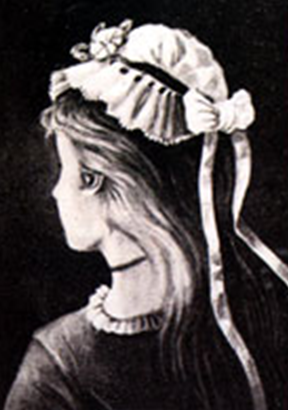
Legend: Do You See a Young Woman or an Old Woman?

Cancer Survivors may look good on the outside, but may struggle with multiple unseen functional problems that are highly unique to them.

  • Physical. Everyday experiences such as walking, standing, moving, lifting, etc. may become difficult and often aggravating, and relief factors and patterns may differ highly from day to day and person to person. Bowel and bladder functions can experience great fluctuations ranging from urgency to incontinence and thus triggering multiple bathroom visits. Still others may be unable to function without external manipulation and the use of medical equipment such as a catheter and/or lubricant, resulting in a prolonged bathroom visits and the need for discreet disposal of personal items.
  • Psychosocial. Some people may experience cognitive issues and find that their patterns of thinking, remembering, and/or concentrating may be somewhat slower than in the past. Emotionally, they may feel as though they are on an emotional rollercoaster. Others may experience the feeling of enormous duress, as medical bills and paperwork may continue to pile up while trying to heal and to manage the daily busy-ness of professional and personal life. Regular and restful sleep may be evasive resulting in being easily overwhelmed and fatigued. Work schedules may need to be adjusted to allow for adequate time to rest, heal, and take care of medical, private and financial concerns. 

Cancer survivors often may feel conflicted – they may not want to be perceived as someone needing special considerations because of their situation, nor as one who may be interpreted as abusing the situation. But it is important to embrace and speak up for the things that they as an individual need to survive and thrive during the process. Fear of being misunderstood can lead to a diminishing of their potential to thrive and heal at their own personal best. Feelings like shame and fear further perpetuate the vicious cycle of a growing distance between the survivor and people around them.

Sometimes little things make a big difference. A disabled person parking placard (for which eligibility can be determined via your not-to-be-forgotten primary care provider!) may allow you to preserve independency and energy for other tasks. Communication is essential in any relationship, whether with coworkers, families, or providers. It is up to you to speak up and care for yourself by letting others know what you need. Only through active and engaged dialogue will we begin to understand and support each other.   

At work, one may need to submit paperwork to Human Resources Department to justify your need for special circumstances that may help protect your employment. And employment discrimination laws protect cancer survivors. Don’t be afraid to avail yourself of the help the law provides for your circumstances! Vocational Rehabilitation Offices at the State level may be able to provide services to help persons with disabilities prepare for, obtain, or maintain employment. Please ask your care team to speak with a social worker or navigator to help find the services that may be best for you.

Most cancer survivors who need accommodations, do not relish this spotlight and the perceived attention it attracts; but the courage to step up and claim what we need may allow us all to gain insight into how the world can be made into a better place . Inclusion and acceptance – we are all together in this world. We can learn from and support one another. Together we stand strong!