Symptoms & Needs

Support for post-treatment symptoms and needs (emotional, physical, functional, financial)

Samenesses and Differences

Samenesses and Differences

Well, it’s me again! And there is only one me! 

I often answer the phone this way. The patient usually asks, “Who is this”? (Amazingly, none of them have ever hung up on me. I guess they’re intrigued.) 

“It’s Dr. van Londen.” 

“Ah, I thought I recognized your voice.”

“There is only one me.” This is the point when the person on the other side of the line starts chuckling. 

But it’s true, there is only one me – and only one you. We are all unique. Inside and out. That’s fortunate because otherwise we would have a boring world! But we are also very similar in many ways, often to our surprise. Realizing this can be a relief and gives us a sense of belonging. 

I find it fascinating to think about our sameness and differences. When interacting with another person, I try to find the features that make us similar to build a sort of common ground and from there feel comfortable to explore the differences between us. 

We all at one point or another have struggled to balance the desire to fit in, as well as a desire to stand out (and be brave enough to show our differences and uniqueness). Being different requires courage, since it may result in misunderstanding, resistance, or perhaps even rejection and bullying, making you feel like you are swimming upstream. 

The ability to achieve a perfect balance, ideally in sync with those around you, is an illusion. It’s an always moving target. The risk of getting out of sync is higher when only one of you changes their rhythm based on personal (perhaps even life-altering) experiences. 

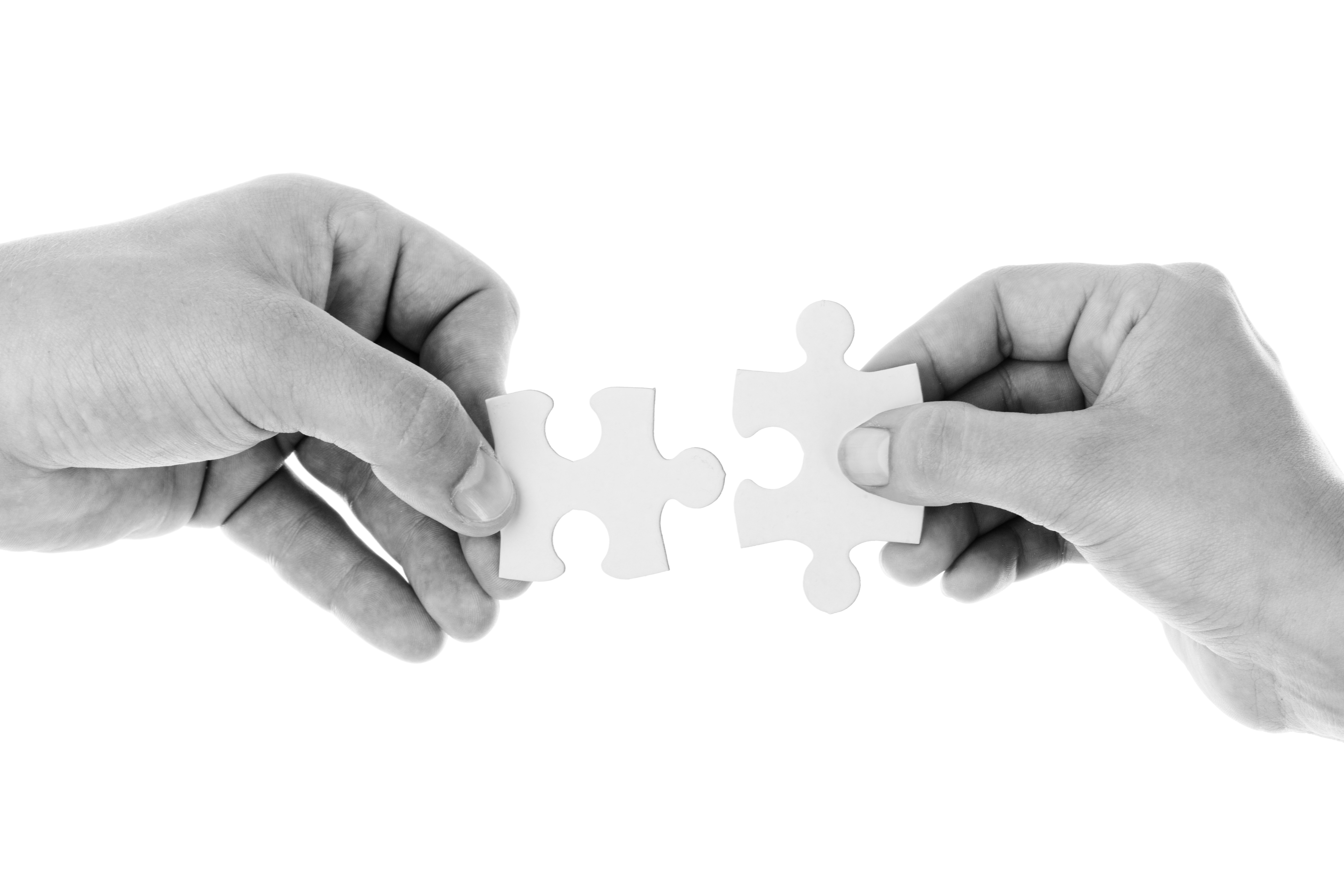
At some point in our lives, we all have experienced our own unique combination of milestones, such as birth, illness, marriage, death, loss of job, or financial stress. However, the details and subtleties of these events and how each of us experience them are what make us unique. You are special, but not alone. The more you communicate with others who are like you, the more you will realize your strength and uniqueness. All of us together can complement each other and complete the pieces of a puzzle. 

Trying to fit in or stand out may not be sustaining in the long run. Give yourself permission to be you, to float along as the water ebbs and flows, back and forth in a natural, unforced cycle, a particle floating in sync with the universe.

Living with Ambiguous Cancer Test Results

Living with Ambiguous Cancer Test Results

I did a medical test. I think I am fine. It doesn’t really matter which test it was, because all tests, whether screening or surveillance, whether imaging or laboratory, have the same underlying shortcoming. None of them are perfect. There is the scientific side of medicine and then there is the artistic side. A health care provider uses research data, experience, judgment, wisdom, and intuition to interpret, diagnose, and create a treatment plan. 

Cancer tests. Should I do them? If I do the tests, when do I do them? Before or after my vacation? Before or after a work deadline? Before or after the holidays? If you decide to submit to a test, beforehand, during, and after your mind can go down rabbit holes. If the results are not normal, you may be presented with further tests, which will lead to more questioning. If the results are normal, though, you often wonder, Can I believe the results? Are they truly normal? If you accept the encouraging results, it’s not long before you start wondering how long this peace of mind will last — an hour, a day, a week, a month? 

We desire to know with certainty that we are clean and will stay clean forever — or at least until the next test. But having certainty about anything in life is an illusion, in particular for cancer survivors who live in fear of recurrence. We long so deeply for comfort and reassurance that we will be fine and will go on living, but nothing will ever give us the certainty that we are looking for. 

As survivors we have to learn to become comfortable with a larger degree of uncertainty than we may have ever experienced before. That acceptance takes time, a lot of soul searching and perhaps talking with others. Every now and then your mind may wander through the mental door to the dark place. Rather than shutting this door with massive nails and locks, we should aim to be comfortable having this door open. This is easier said than done, asking our minds to not wander into the dark place too often and too far but just enough to briefly remind us of the grief and pain we have been through, to renew our sense of clarity, to not suppress fear, yet also not let it overwhelm us. In short, to find that sweet spot. 

Giving in and allowing yourself to fret and think of the worst-case scenario, but only for a well-delineated period of time per day (perhaps 5, 10, or 15 minutes) will hopefully allow you to fill up the rest of your day with healthier coping mechanisms (such as altruism, suppression, transformation, and humor). There is a time for everything — a time to worry and a time to “Eat, Pray, Love“, as a famous writer once said. Try to find that dynamic balance that works best for you and your loved ones.

Cancer: Quarantine

Cancer: Quarantine

We all desire a magical touch, a mysterious click, or a chemistry connection. However you may choose to label these experiences, they make us feel like we matter, are understood, and have a place in this world. To be touched is important for everyone, but in particular for those of us who cannot actively keep up with the world due to health issues such as those connected to cancer and its treatments. We sometimes feel pushed to the outskirts and demarginalized, wondering how we can reclaim our spot in the race (perhaps with a bit of a  recalibration to allow us to keep up)! 

You may be excluded socially because of illness when you have:

  • Impaired ability to sit, stand and/or walk around: This may hamper your ability to go to events that lack (comfortable) chairs, accessible entries or parking, or require you to walk long distances. Having to plan ahead to assure accessibility hinders spontaneous plans and can exhaust you before the event has even started. 
  • Impaired immune system: This can cause you to avoid large crowds and may make you feel vulnerable when you roam around in your local community, dampening your ability to enjoy yourself because you are always on the lookout for those who have obvious signs or symptoms of infection. 
  • Unpredictable bowel and bladder pattern: This requires you to adapt your intake of food and drink to minimize your risk of needing to urgently find a restroom. It can also draw uncomfortable attention to you when you need to use a non-hygienic bathroom. 
  • Fatigue: When you experience fatigue regularly, you need to preserve your energy for your work and family which makes it less appealing to leave the comfort of your home for a recreational or social event. 

This is what I like about quarantine — everyone is limited in their freedom to go about their lives. It makes me feel like I am not an outcast anymore. Now, we are all being accommodated and I am not any different. Everything in my professional and personal life is accessible virtually. I hope it will stay like this when the pandemic subsides so that something good will come out of this stressful time in our history and so that those who are forced to stay at a physical distance can still stay in touch socially. 

I have been able to take part in concerts, book clubs, meetings (locally, nationally, and internationally), which I wouldn’t have been able to do if we weren’t quarantined. It made me feel included. I did not feel like I had a target on me, drawing attention to myself with my inability to keep up. There’s been no need for me to awkwardly explain (or justify) myself or avoid invitations or opportunities altogether. Being able to keep up with those around me is very good for my mental health and leads to reduced physical strain.

I hope that when we come out of quarantine people will continue to think about how to make life virtually accessible for those of us with impairments. Of course, there are many benefits to an in-person meeting that can never be replaced by the cyber world, but as long as we find a happy medium and do not overshoot the pendulum from one extreme to the other, then we all at least have a choice between attending in person versus virtually. I hope that the last few months have empowered you to find a comfortable way to gently remind your healthy loved ones to continue to include you once life swings back towards the direction of  “normal”. 

Thank you for visiting me. Join our Facebook group! Remember, I share ‘extra treats’ if you follow me on FacebookInstagramTwitter, or Pinterest! Plus, you can get notified of a new posting by subscribing to our newsletter!

Please help by nudging us if you encounter technical problems.

Cancer: Touch

Cancer: Touch

Humans crave touch, which can mean different things to different people…

Someone may desire to be touched physically in a manner that reflects passion, desire, love, or care, releasing hormones that promote trust and bonding. The physical touch can be delivered by a loved one, a random person (when standing close to each other in the elevator, for example), or even an animal. A lack of physical touch may result in touch starvation or skin hunger. 

Emotional touch is when a living creature, whether an animal or another human being, is able to connect with your thoughts, feelings, intellect, mind, or soul in a way that makes you feel valued, appreciated, and respected. This can take the form of a meaningful look exchanged in line at the grocery store, a random conversation with a stranger in a coffee shop. Moments like this may make you feel like you have known this person for years while you have just met for the first time. These brief moments cannot always be acted upon and may just remain random memories that you hold onto as a trail of lights illuminating your path through life, but sometimes, when the time or place is right, they may lead you to expand your social circle by finding more like-minded people with whom you share priorities and values. 

Cancer survivors may have a conflicting relationship with touch. They may desire more touch to help soothe and comfort themselves, but may be concerned to be a burden to loved ones. Survivors may be apprehensive given contamination risk from infections (please ask your provider for advice). Physical touch may also release negative emotions or repressed memories that have kept one from progressing in their healing.  Touch can be physically painful depending on the nature and lingering effects of cancer treatments.

The point I’m trying to make is that cancer survivors are still human, although our preferences for touch may have changed. Please be kind to yourself and openly communicate with loved ones to ensure that your needs, wants, and boundaries are being respected. Let them know how you’d love to stay in touch!


And now…..drum roll…..! I am very excited to be able to announce today’s launch of our Facebook group for post-treatment cancer survivors, who have completed their active therapy phase (i.e.. surgery, radiation, chemotherapy). For now, we will only focus on this specific group, but please note that there are other Facebook groups for those living with cancer and/or undergoing active therapies. My hope is that this Facebook group will provide a sense of community, validation, empowerment, and a safe place for healing. We are stronger together! Please let others know about this resource. This group does not offer medical advice (see Facebook group rules and disclaimers on https://cancersurvivormd.org/disclaimers/).


Thank you for visiting me. Remember, I share ‘extra treats’ if you follow me on FacebookInstagramTwitter, or Pinterest! Plus, you can get notified of a new posting by subscribing to our newsletter!

Please help by nudging us if you encounter technical problems.

Cancer: Management Principles of Late- or Long-Term Post-Treatment Symptoms

Cancer: Management Principles of Late- or Long-Term Post-Treatment Symptoms

Post-cancer treatment survivors tend to experience physical, functional, and/or psychosocial symptoms. Sadly though, we know very little about the time course of these symptoms and modulating factors. We also lack data to understand how to best control symptoms in cancer survivors. As a result, we often extrapolate from the non-cancer domain.  Steps are being taken, slowly but in the right direction, to create a large HIPAA-secure dataset that combines electronic patient data from different institutions and organizations that will allow us to gain an insight into some of these factors. Unfortunately, this process is complicated by the fact that these data are collected from real life and are not systemically-collected research data (which would be easier to analyze).

In spite of these challenges, we do have ways to support cancer survivors’ symptoms and needs. This blog is not geared towards management of a specific symptom, but outlines my general principles of managing symptoms:

  • Validation — It may be challenging for you to put your symptoms into words and to find a health care worker who listens, tries to understand and ideally knows how to best support you. If there is any breakdown in this chain of communication, you may find yourself feeling not supported, feeling like you have a crooked body, or even wondering if you are imagining your symptoms. You know your body best. If you feel there is something amiss, then there is — even if you don’t have the words to describe it, the issue is not advanced or specific enough to be diagnosed, or your provider does not have the  time or the needed expertise. Acknowledgement of the fact that you sense something is happening in your body can be very empowering. Most of you trust your health care providers and prefer to stay loyal. Therefore, if you feel there is a break-down in communication, I would advise you to try to openly explore opportunities for improvement with your provider (e.g. by asking for an extra visit or phone call). But in the end, you are a client of a health care business, and as such you should feel free to find a provider with whom you feel more comfortable communicating and can synergize to optimize your health outcomes.
  • Realistic expectations — First and foremost, I try to create, if not correct, expectations related to prognosis by explaining that I don’t have a magic wand and that symptoms may not improve or resolve as quickly as you wish, if at all. 
  • Clustered symptoms — It’s important to understand that the reason most survivors have more than one symptom is because one trigger can set off a cascade of other symptoms, creating a vicious cycle. For example, if you are on a cancer therapy that lowers your hormone levels then you may experience night sweats that interfere with your sleep. That can lead to irritability and cause lesser brain function during the day. 
  • Multiple small personalized interventions — Due to the interrelatedness of symptoms, it may not always be effective to put all your “eggs in one basket”. Multiple small personalized interventions geared towards several domains (e.g. nutrition; physical exercise; psychological, pharmacological, or social interventions) may be most doable and helpful. It’s best to start low and slow to find the minimal amount of effort to achieve symptom tolerability.
  • Shared-decision making — Because evidence for symptom control may be lacking or different treatments have not been compared head-to-head, there is not often clear clinical guidance in terms of first, second, or third lines of therapy. As a result, I encourage, and even find it imperative, to get input from the patient in terms of their preferences. Some patients may not prefer to put any more pharmacological therapies in their body, while others may prefer to pursue more time-consuming (and at times more expensive) non-pharmacological methods. 
  • Tiered care — Ideally, medical professionals should help you in a proactive approach by monitoring your symptoms and needs over time so they can maneuver you between tiers of care that offer varying levels of support (self-help, telemedicine, face-to-face, etc.). 
  • Care-team — Last but not least, realize that you are part of a healthcare team that includes many cancer and non-cancer health care workers. Every team member should try to do their best to coordinate care (whether that be in a written/verbal, synchronous or asynchronous manner) to allow continuity of care and minimize risk of redundancy, overtreatment, and errors.

The underlying fear for new symptom development in a cancer survivor is always the concern as to whether the symptom may represent a cancer recurrence. As outlined in a previous blog, please don’t Google. Call a provider, ideally a cancer specialist, who can talk things through with you. You are not alone! 

Thank you for visiting me. Remember, I share ‘extra treats’ if you follow me on FacebookInstagramTwitter, or Pinterest! Plus, you can get notified of a new posting by subscribing to our newsletter!

Please help by nudging us if you encounter technical problems.

Cancer: Survivor’s Guilt

Cancer: Survivor’s Guilt

Cancer survivors may be troubled by survivor’s guilt. Some may experience it more deeply than others and it may linger longer for some. People may experience guilt for different reasons. There are many different ways to look at guilt. 

Who do you feel guilty towards? Sometimes you may know the answer. For example, you may think about a cancer patient who had your same tumor type and who you connected with when you received infusions at the treatment center. Or someone you met waiting for doctor’s visit appointments. Or a loved one who put their own life on hold to support you. Sometimes you may not feel guilty towards anyone in particular (yet).  

What do you feel guilty about? Your guilt may reflect something you did but didn’t want to do or something you didn’t do but wish you had. Sometimes you may feel guilty that you’re doing better or worse than someone else. 

Survivor’s guilt represents the notion that you survived, while your peer did not, making you perhaps feel that you could (or should) have tried harder to save the other person. This leads to wondering about your purpose. Why was I spared? Does my fate have another mission to complete?  Do I deserve more time? These thoughts may lead to feeling guilty that you aren’t using the extra time given as intensely, meaningfully, or purposefully as you could. You may also feel guilty that you were a burden for your loved ones, holding them back from living their lives. These are classic examples of survivor’s guilt. Knowing we humans, there are probably many more unique reasons than these that we can find to feel guilty. 

Guilt can manifest in many ways. Self destruction (e.g. drugs, alcohol, nicotine, underperformance at work, relationship dysfunction) and overcompensation (e.g. showering someone with presents) are two examples. It can look like or coexist with anxiety, depression, or even post-traumatic stress. Guilty thoughts and feelings are a normal part of the journey and cannot be easily eradicated, but we must try to make them manageable and tolerable to stop them becoming all-consuming and killing our joy. 

Acknowledging both the thoughts of your brain and feelings of your heart rather than repressing them will allow you to channel your energy into a force of growth rather than destruction. It will allow you to take steps towards changing your perspective into a more realistic one. 

  • Recognize that feeling guilty will not bring someone back to life or undo your (in)actions.
  • Remember that it is easy to realize after the fact what you could/should have done. 
  • Let your relationships provide the love and support you need when things are good and bad. Work with your loved ones in synergy; catch each other when you fall. 

Having honest conversations with your loved one(s) may allow you to share and take ownership in your life decisions. And of course, the passing of time can also be healing, allowing you to grieve what or who has been lost. If the guilt causes any dysfunction, there is no shame in talking with a professional, which may be necessary if talking to your loved ones about your pain perpetuates guilty feelings.

Everyone needs to find their own way towards making peace with guilt. Hopefully this will allow a weight to be lifted off your shoulders, so you can breathe more freely, stand up straighter, and allow yourself to enjoy more. Embracing the extra time you have been given after your cancer diagnosis is the best way to honor those you may feel guilt towards. And, please remember that you are only human and you are enough! 

Thank you for visiting me. Remember, I share ‘extra treats’ if you follow me on FacebookInstagramTwitter, or Pinterest! Plus, you can get notified of a new posting by subscribing to our newsletter!

Please help by nudging us if you encounter technical problems.

Cancer: Legacy

Cancer: Legacy


 When a disease confronts you with your mortality, you may start to wonder about your legacy — how you would like to be remembered when you have passed on. Everyone’s hopes and expectations about legacy differ. We all write our own unique life stories, like chapters in our book of life. Cancer may influence the direction of the story, but it cannot control our narrative. 

We all strive to leave behind a footprint when we are gone. The question is how. People have different ideals for their legacy. On one end of the spectrum, some people may prefer to focus all their time/energy/love on a select few people, while others may choose to invest in an activity that would leave a larger footprint in the world. 

Everyone is different and preferences, hopes, and ideals may change. There is nothing wrong with that, as long as you are aware of what drove that change. A healthy self awareness is good for life in general. I found the movie The Fault is in Our Stars, which shows two teenage cancer patients exploring their own perspectives on legacy, to be a great example of this concept. 

We leave a legacy in one way or another by just going about our lives. It’s hard not to. However, all we can do is shape our legacy, realizing that how we made people feel will be remembered more distinctly than our actions. We all touch other people, make an impression on them and impact their lives in a manner that we may not even be aware of. This is the so-called ripple effect which allows us to continue to live on indefinitely. 

It’s important to strive for connection, purpose, and meaning in life. Building towards your idea of a legacy will foster this pursuit and may allow distraction, healing, and channeling of your inner energy into an external target that helps both you and others. But more than that, it may allow you to get a sense of calm and peace, knowing you are working towards building a legacy that fits with who you are and where you stand in life.

Thank you for visiting me. Remember, I share ‘extra treats’ if you follow me on FacebookInstagramTwitter, or Pinterest! Plus, you can get notified of a new posting by subscribing to our newsletter!

Please help by nudging us if you encounter technical problems.

Cancer: Why Me? Why Now?

Cancer: Why Me? Why Now?

Many of my patients understandably wonder and ask, “Why did I get cancer?” I do not necessarily have a medical or scientific answer. I wonder if the question behind the question is, “Why me?” From that question comes others: “Why now? Can it happen again? What can I do to prevent that?” 

There are certain risk factors that predispose one to cancer. These factors (including genetics, environment, and lifestyle) are also associated with poorer outcomes for certain patients. However, there is not always a cause-effect relationship. 

My late mentor taught me a simple way to explain the different levels of cancer risk; it can also be applied to those who carry a cancer diagnosis. On the one end is the general population for whom gender/age appropriate cancer screening guidelines apply. On the other end are those whose families transmit the cancer gene. For this group, we have proactive and comprehensive approaches to try to decrease the risk. Lastly, is the in-between group whose cancer risk is unknown. These are people who have had one cancer diagnosis. This puts them at an undefined higher risk than the general population to get another cancer, but at lower risk than those who harbor the cancer gene. (Unfortunately, data is lacking for those “in-between” individuals, so we resort to general population guidelines). 

Even though we are in the 21st century, nature and our bodies remain a mystery with many unknown variables. Sometimes we just really don’t know why cancer happens to you or why it happens when it does. Questions that probe the why are good, though. Our why questions reflect how we cope with our diagnosis and try to make sense of it. They indicate our curiosity to try to understand the mystery of life. This is healthy as long as we acknowledge that life’s mystery is one that likely won’t be unraveled entirely for another few generations, if ever.

A cancer diagnosis never comes at the right time. (If not now, when?) It can happen to anyone. (If not you, who?) As the current pandemic teaches us, we are not invincible or immortal. Life is not fair. Embrace your curiosity and let it empower you without letting it overwhelm you. 

Be kind to you and others….

Thank you for visiting me. Remember, I share ‘extra treats’ if you follow me on FacebookInstagramTwitter, or Pinterest! Plus, you can get notified of a new posting by subscribing to our newsletter!

Please help by nudging us if you encounter technical problems.

Cancer – Embracing Our Emotions

Cancer – Embracing Our Emotions

Many of you may feel like being in the midst of this pandemic has you stuck between a rock and a hard place. What’s worse — delaying cancer testing/treatment or risking Coronavirus exposure? Having to choose between two evils, you must try to anticipate and minimize your risk. 

Medically speaking, this is unknown territory, so I strongly recommend that all of you make decisions about your personalized cancer care with your medical oncologist. Here is a resource that may help to facilitate your communications. 

There is a reason we have a spectrum of emotions that can range from fear, sadness, anger, and sorrow to happiness and joy. There is no need to put up a facade and deny any of these feelings. Doing so may make things worse and make us feel fragmented. Allowing all these feelings to coexist and being in touch with them will facilitate integration, healing and inner peace. I had previously outlined a few examples of mature coping styles, but only you know what will soothe you most. If emotions are causing you or your loved ones debilitating pain or dysfunction, please reach out for help! 

I think the trick is not trying to keep the joys and the tragedies apart but you kinda gotta let them cozy up to one another, you know, let ’em coexist. And I think if you can do that, if you can manage to forge ahead with all that joy and heartache mixed up together inside of ya — never knowing which one is going to get the upper hand — well life does have a way of shaking out to be more beautiful than tragic.

Dr. Nathan Katowski (by Gerald McRaney) in This Is Us.

When you are aware of all your feelings, you can choose how to approach and act on them.  Embracing fear without letting it paralyze you, but allowing its energy to cautiously propel you forward can help you to express the best version of who you can be so you can love and honor yourself and the world. The hope is that a new (and better) normal will be born out of the Coronavirus tragedy — at global, national, local, and personal levels! 

Thank you for visiting me. Remember, I share ‘extra treats’ if you follow me on Facebook, Instagram, Twitter, or Pinterest! Plus, you can get notified of a new posting by subscribing to our newsletter!

Please help by nudging us if you encounter technical problems.

Cancer and Loneliness

Cancer and Loneliness

Currently, our society is engaged in social distancing to minimize Coronavirus’ footprint. Many of us are spending more time at home which can help us to rekindle our connections with our loved ones, but some of us are lonely. Elderly people may not have or know how to use devices that would allow them access to social media, FaceTime and the like. And even if you are able to stay in touch electronically, it’s not the same as having a physical, personal interaction. 

This made me think about cancer survivors (and their caregivers), many of whom may be alone at some point in their journey. This solitude may serve a purpose for many, but there’s a thin line between solitude and loneliness, which reflects a state of suffering and sadness due to lack of company

As a cancer survivor or caregiver, you may withdraw into yourself for a number of reasons. For instance, it may help you to process your thoughts and feelings and get ready for the overwhelming new situation that you have on your hands. Another reason could be self preservation; you may not want others to see you at your most vulnerable. Keeping up a facade to protect others from your feelings and thoughts or the severity of your situation may be another reason. Also, it can be distracting to have to navigate the reactions of others around you if you barely have enough reserve to keep yourself going.

However, it takes two to tango! People around you may give you more emotional or physical space than you need. They may want to avoid ‘bothering’ you. They may not know how to be of any help or what to say. They may not want to cause hurt by saying the wrong thing or introducing infectious organisms. But it can also be due to the fact that those not affected don’t want to physically contract cancer or have their perfect life stained by the perceived misery.

The reason for my outlining the different reasons for loneliness is that it may help you to gain insight into the potential drivers behind your behavior, which can prevent misunderstandings and allow you and your loved ones to communicate more openly and respectfully with each other and health care providers, and therefore act with more intent and purpose.

Thank you for visiting me. Remember, I share ‘extra treats’ if you follow me on Facebook, Instagram, Twitter, or Pinterest! Plus, you can get notified of a new posting by subscribing to our newsletter!

Please help by nudging us if you encounter technical problems.