
Articles with #cancersurvivormd

It’s About Time!

The concept of time is interesting. It doesn’t always seem to be aligned well with what we need or want to do. Sometimes we have too much time and sometimes too little. Sometimes it goes too slow, and sometimes too fast. Oftentimes we wish our time away because we eagerly anticipate the weekend or a certain event. This can make time feel like it has slowed down. Then we find that when the anticipated event happens, time flies by seemingly at warp speed! Days and weeks may feel like they pass slowly, while years pass quickly. At times, we feel we waste half our lives standing in line.
I think we all have a conflicted relationship with time. There is never enough time in life. But whether we are in a period that we enjoy or one we wish would pass, all of these times are part of our finite life. I wonder if our conflict may be helped by an evenly-suspended attention span, to be able to observe ourselves and our surroundings at every moment in time in a neutral perspective without any expectation or judgment. If we could master not being constantly engaged or disengaged, but to be evenly submerged throughout all our activities every day. By not giving preconceived importance or priority to any part of our days or lives, we could allow ourselves the freedom to find meaningful opportunities even in the rougher times. Some may compare this to mindfulness meditation activities, but these activities are short-lived, while an even attention span is one to be applied throughout the whole day. Some infinities are longer than others.
We tend to say that time flies when you’re having fun, but then a patient reminded me that time also flies fast when you’re not having fun! Not feeling well due to cancer and its treatments can make you retreat into a cocoon and lose track of time, while the world (hopefully only temporarily) continues to evolve around and without you, almost rendering the illusion that you are standing still. In short, cancer survivors have a complicated relationship with time. Being aware of that may perhaps help you remain kind to yourself, set (realistic and do-able) priorities, ask for and accept help, and make choices (and memories, hopes, and wishes) that fit best with where you are in your journey.
Dr. Fauci offers 2021 forecast on COVID-19 vaccines, treatments
SARS-CoV-2 vaccines and various new treatments for COVID-19 may be on their way even before 2020 ends, but the damage caused by the deadly novel coronavirus may linger for months or even years, said Anthony S. Fauci, MD, during an exclusive interview presented during a Saturday plenary session of the November 2020 AMA (American Medical Association) Section Meetings.
Let’s Talk Cancer and Brain Fog!
Brain function can be affected by many factors above and beyond cancer and its therapies (including anesthesia!). Watch the video to learn more about what it is, why it might be happening, and how to support it.
Samenesses and Differences
Well, it’s me again! And there is only one me!
I often answer the phone this way. The patient usually asks, “Who is this”? (Amazingly, none of them have ever hung up on me. I guess they’re intrigued.)
“It’s Dr. van Londen.”
“Ah, I thought I recognized your voice.”
“There is only one me.” This is the point when the person on the other side of the line starts chuckling.
But it’s true, there is only one me – and only one you. We are all unique. Inside and out. That’s fortunate because otherwise we would have a boring world! But we are also very similar in many ways, often to our surprise. Realizing this can be a relief and gives us a sense of belonging.
I find it fascinating to think about our sameness and differences. When interacting with another person, I try to find the features that make us similar to build a sort of common ground and from there feel comfortable to explore the differences between us.
We all at one point or another have struggled to balance the desire to fit in, as well as a desire to stand out (and be brave enough to show our differences and uniqueness). Being different requires courage, since it may result in misunderstanding, resistance, or perhaps even rejection and bullying, making you feel like you are swimming upstream.
The ability to achieve a perfect balance, ideally in sync with those around you, is an illusion. It’s an always moving target. The risk of getting out of sync is higher when only one of you changes their rhythm based on personal (perhaps even life-altering) experiences.
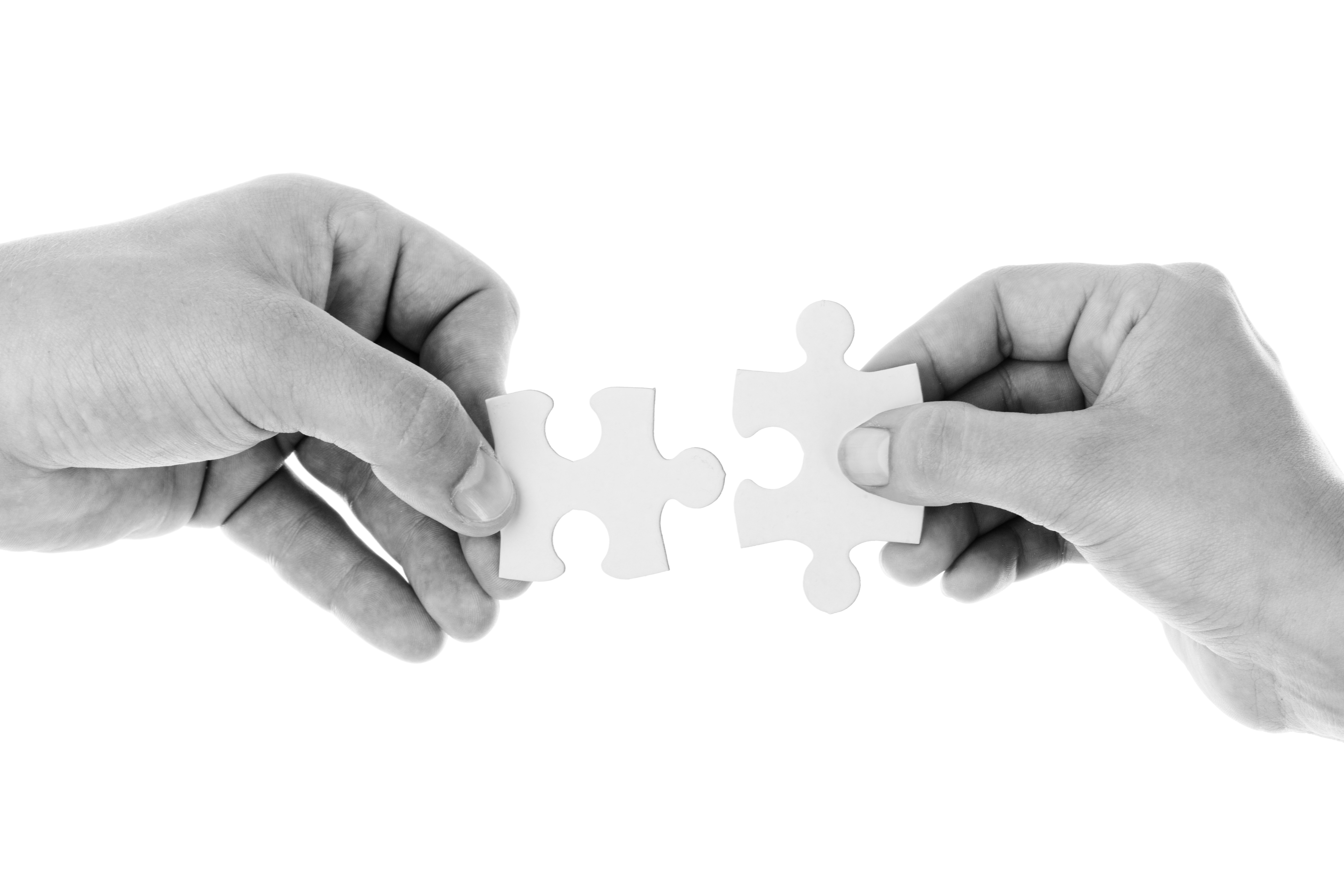
At some point in our lives, we all have experienced our own unique combination of milestones, such as birth, illness, marriage, death, loss of job, or financial stress. However, the details and subtleties of these events and how each of us experience them are what make us unique. You are special, but not alone. The more you communicate with others who are like you, the more you will realize your strength and uniqueness. All of us together can complement each other and complete the pieces of a puzzle.
Trying to fit in or stand out may not be sustaining in the long run. Give yourself permission to be you, to float along as the water ebbs and flows, back and forth in a natural, unforced cycle, a particle floating in sync with the universe.

Living with Ambiguous Cancer Test Results
I did a medical test. I think I am fine. It doesn’t really matter which test it was, because all tests, whether screening or surveillance, whether imaging or laboratory, have the same underlying shortcoming. None of them are perfect. There is the scientific side of medicine and then there is the artistic side. A health care provider uses research data, experience, judgment, wisdom, and intuition to interpret, diagnose, and create a treatment plan.
Cancer tests. Should I do them? If I do the tests, when do I do them? Before or after my vacation? Before or after a work deadline? Before or after the holidays? If you decide to submit to a test, beforehand, during, and after your mind can go down rabbit holes. If the results are not normal, you may be presented with further tests, which will lead to more questioning. If the results are normal, though, you often wonder, Can I believe the results? Are they truly normal? If you accept the encouraging results, it’s not long before you start wondering how long this peace of mind will last — an hour, a day, a week, a month?
We desire to know with certainty that we are clean and will stay clean forever — or at least until the next test. But having certainty about anything in life is an illusion, in particular for cancer survivors who live in fear of recurrence. We long so deeply for comfort and reassurance that we will be fine and will go on living, but nothing will ever give us the certainty that we are looking for.
As survivors we have to learn to become comfortable with a larger degree of uncertainty than we may have ever experienced before. That acceptance takes time, a lot of soul searching and perhaps talking with others. Every now and then your mind may wander through the mental door to the dark place. Rather than shutting this door with massive nails and locks, we should aim to be comfortable having this door open. This is easier said than done, asking our minds to not wander into the dark place too often and too far but just enough to briefly remind us of the grief and pain we have been through, to renew our sense of clarity, to not suppress fear, yet also not let it overwhelm us. In short, to find that sweet spot.
Giving in and allowing yourself to fret and think of the worst-case scenario, but only for a well-delineated period of time per day (perhaps 5, 10, or 15 minutes) will hopefully allow you to fill up the rest of your day with healthier coping mechanisms (such as altruism, suppression, transformation, and humor). There is a time for everything — a time to worry and a time to “Eat, Pray, Love“, as a famous writer once said. Try to find that dynamic balance that works best for you and your loved ones.