Articles with #cancersurvivorphysician

Cancer and Coronavirus Disease 2019 (COVID-19)

Cancer and Coronavirus Disease 2019 (COVID-19)

How are you? Really…?! It has been a brutal week for many. For me too, as a loved one, friend, and provider, but also as a patient, as my surveillance testing has been delayed by a few months.

Like you, I find myself homebound, trying to find a new normal for the time being.

I thought I would write a quick post for not only cancer survivors, but those who find themselves in the midst of the Coronavirus Pandemic.

  • General Coping Strategies:
    • Be kind to yourself and others. There is not one normal emotional reaction to a global (and terrifying) crisis like this. It affects all of us differently. If you have been traumatized before then these same thoughts/feelings can be easily triggered by other overwhelming experiences like this epidemic. And for some of you, your treatment regimens may be changed around. Please know that organizations and institutions do not make these decisions lightly. They look at each situation on a case-by-base basis and strive to minimize the impact on the patient’s health outcomes. Being stuck in this state of uncertainty between two life-threatening choices, a rock and a hard place, is an impossible place to be for anyone. Please remind yourself that we are all unique. Allow yourself time to transition, to become aware and experience your feelings on your own and/or by talking with others. If you feel the walls are closing in on you while you are quarantined — no pun intended — or if you are experiencing financial stress, please rise above your feelings of shame or guilt, and reach out for support! 
    • Educate yourself by following reputable resources that are updated frequently to respond to this rapidly-evolving series of events, such as the ones listed above. Information can be comforting and empowering. Following the recommended preventive measures may give us a sense of control and togetherness. However, don’t let information consume you. Too much information may result in anxiety and panic. 
    • Keeping a physical distance does not have to result in social isolation! However, nothing can replace the in-person experience of a major event (such as a wedding, funeral, or even a moment the passing of a loved one). This can be heartbreaking and soul-crunching. These once-in-a-lifetime moments have been taken away by a force de majeur. No one can control this. You will never forget the pain of not being able to be there, but hopefully the passing of time will allow the sting to become less intense. Modern communication tools, including a landline, are there to allow us to safely connect with others and to creatively still be able to commemorate a special event. 
    • Distract yourself from your negative thoughts with everything from necessities (such as chores) to fun activities, in solitude or with others. Perhaps now is the time to connect with a person you have been meaning to call for a long time or to pick up a hobby that your life ordinarily has no space for. Even try doing absolutely nothing. (It’s hard to do. I challenge you!) The silver lining of this terrible time for our world might be that you have the opportunity to pursue new experiences that you may want to continue even after the pandemic has dissipated. 

I wish you all the strength you need to endure the following few weeks to months. Be kind to yourself and others….together we stand strong! 

Thank you for visiting!   

Please help by nudging us if you encounter technical problems.

Cancer and Loneliness

Cancer and Loneliness

Currently, our society is engaged in social distancing to minimize Coronavirus’ footprint. Many of us are spending more time at home which can help us to rekindle our connections with our loved ones, but some of us are lonely. Elderly people may not have or know how to use devices that would allow them access to social media, FaceTime and the like. And even if you are able to stay in touch electronically, it’s not the same as having a physical, personal interaction. 

This made me think about cancer survivors (and their caregivers), many of whom may be alone at some point in their journey. This solitude may serve a purpose for many, but there’s a thin line between solitude and loneliness, which reflects a state of suffering and sadness due to lack of company

As a cancer survivor or caregiver, you may withdraw into yourself for a number of reasons. For instance, it may help you to process your thoughts and feelings and get ready for the overwhelming new situation that you have on your hands. Another reason could be self preservation; you may not want others to see you at your most vulnerable. Keeping up a facade to protect others from your feelings and thoughts or the severity of your situation may be another reason. Also, it can be distracting to have to navigate the reactions of others around you if you barely have enough reserve to keep yourself going.

However, it takes two to tango! People around you may give you more emotional or physical space than you need. They may want to avoid ‘bothering’ you. They may not know how to be of any help or what to say. They may not want to cause hurt by saying the wrong thing or introducing infectious organisms. But it can also be due to the fact that those not affected don’t want to physically contract cancer or have their perfect life stained by the perceived misery.

The reason for my outlining the different reasons for loneliness is that it may help you to gain insight into the potential drivers behind your behavior, which can prevent misunderstandings and allow you and your loved ones to communicate more openly and respectfully with each other and health care providers, and therefore act with more intent and purpose.

Thank you for visiting me. Remember, I share ‘extra treats’ if you follow me on Facebook, Instagram, Twitter, or Pinterest! Plus, you can get notified of a new posting by subscribing to our newsletter!

Please help by nudging us if you encounter technical problems.

Cancer and Intimacy

Cancer and Intimacy

Sexuality plays an important role in society, facilitates reproduction, and helps us to feel connected to our partner as well as to ourselves. When you are told that you have cancer, it can affect the desire of either or both partners. For some people, desire decreases (as they are distracted and not in the mood), while for others physical intimacy may sooth or provide welcome distraction.

Cancer therapies can affect sexuality in many ways. Qualitatively, your routine sexual act may need to be adapted due to anatomical changes (e.g. pelvic or breast surgeries) or functional changes (e.g. erectile dysfunction, vaginal dryness or scarring). Quantitatively, the frequency and duration of sexual acts may change, usually lessening. Reasons for the latter can be due to the experience of pain, discomfort, shame, or guilt, but also because one’s desire may be decreased when going through premature menopause/andropause, anxiety, or depression.

Oftentimes, I see couples, whether in brand-new or long-lasting relationships, in which I sense that both partners are longing for a connection but are not communicating about this out of concern for disrespecting or hurting the other. Finding a safe environment for this communication may help healing to begin. Also, it may encourage a cancer survivor to feel confident enough to talk with a health care provider to find if there is anything that can be done to improve matters.

There are medications and devices that can improve, if not resolve, anatomic/functional deficits. (As a gentle reminder, hormone replacement therapy is not an option for those who are survivors of tumors that are fueled by hormones.) Talk- and/or pill-therapy can emotionally support partners.

However, at the end of the day some things may not be fully restored to the pre-diagnostic state. Some emotional and physical scarring may be permanent. In these situations, partners may have to work harder and be more creative in finding ways to connect with each other in ways that are enjoyable, pleasurable, and satisfying for both. In addition to intimacy, identity and security can also be altered by cancer. Therefore, even couples who have been together for a long time may need to reset and rekindle their relationships. Keep in mind that sexuality is one form of physical intimacy. You may want to explore other forms of physical intimacy, such as sensuality and eroticism.

There are many other ways of being intimate that can enhance or compensate for the impaired ability to connect physically. Examples of these alternative forms of intimacy are emotional (connecting with someone else in spoken or unspoken ways that express your love), intellectual (participating in communication about a topic that both parties are passionate about), and experiential (sharing activities and making memories together).

Enjoy connecting!

Thank you for visiting me. Remember, I share ‘extra treats’ if you follow me on Facebook, Instagram, Twitter, or Pinterest! Plus, you can get notified of a new posting by subscribing to our newsletter!

Learn & Think, Live & Feel:

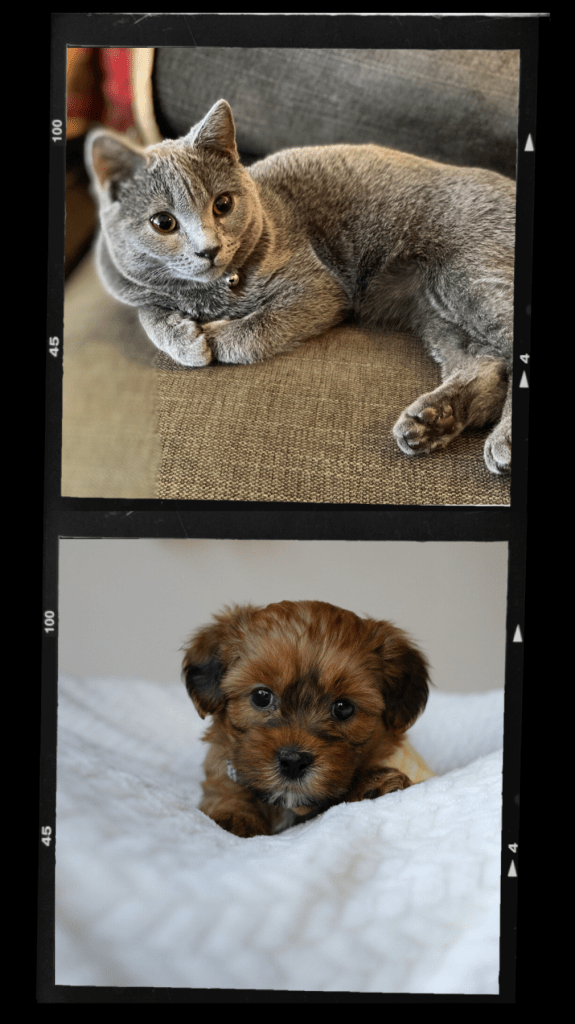
My family decided to go all in. For years we have held ourselves back due to various issues including active or anticipated medical issues. Recently, we decided to get some more love in our house. A month ago, we expanded our family to include our beloved cat, Melky. In another month, we will be expanding again with a dog, Cookie. We are fully aware that having a pet may bring more responsibilities, worries, and expenses, so we have backup plans in place, but we do not want to miss out anymore on the therapeutic joy pets can bring. Stay tuned for our adventures!

Please help by nudging us if you encounter technical problems.

“Sibling” Rivalry Amongst Cancer Survivors

“Sibling” Rivalry Amongst Cancer Survivors

Working with cancer survivors, I have noticed a trend in which we support each other as peers, but sometimes hurt and isolate each other. Cancer survivors may feel a sense of commonality and connection to each other that they may not find with the general population — validation, a sense of physical vulnerability. This sense of comradery is crucial for guidance, role modeling, fitting in, and feeling hope that others made it through and survived, and hopefully, thrived. 

However, at the same time, a cancer survivor may desire recognition, approval, or praise. They may seek to stand out by comparing themselves in terms of cancer types, stages, or intensity of and types of cancer therapies. Inherent to this pursuit is often unconscious competition. (My cancer was worse. My therapies were worse or lasted longer or had more post-treatment effects. I had less support or finances.) This competition amongst cancer survivors may lead to hurt one or both parties and is very similar to a kind of sibling rivalry. The perpetrator may do this to redefine their identity, stand out, get attention and support, or be recognized for their unique victory. The victim may feel bullied and isolated, but should not take it personally. 

However, at the end of the day it’s important to accept the reality that none of our journeys are lighter or heavier, they are just different. Smaller tumors may require intense therapies when their behavior is aggressive. Simpler treatment regimens can still cause a great deal of bodily damage depending on their location and the patient’s ability to tolerate them. We all try to go about our travels the best we can. 

Comparing and hearing others’ stories can help but also hurt. When you tell your stories, please think about why you are sharing — to scare the other person by showing off your hardships or to help the other person by providing support, insight, and (realistic) hope. And if someone tells you a story that makes you feel upset, you should feel comfortable letting that person know in a calm and respectful manner. If communication does not help end this unhealthy dynamic, you may want to ask a neutral third party to intercede. If you still find yourself at odds, a (hopefully temporary) distancing may be needed. In tough times, it’s crucial to remember that all cancer survivors may have been scarred emotionally and try to focus on what keeps us united rather than divided. 

Thank you for visiting me. Remember, I share ‘extra treats’ if you follow me on FacebookInstagramTwitter, or Pinterest! Plus, you can get notified of a new posting by subscribing to our newsletter!

Please help by nudging us if you encounter technical problems.

Meditation and Cancer Survivorship

Meditation and Cancer Survivorship

Meditation, if done on a regular basis, has been shown to be able to provide many emotional and physical symptom-relief benefits for cancer survivors. I don’t know about you, but I have tried a few meditation activities and they don’t always make me calmer. When I sit quietly and allow vague fragments of thoughts, feelings, and images to pop up in my mind, sometimes I feel more confused, overwhelmed and stressed. I frustratedly wonder, “Why can’t I seem to relax?!” 

But, let’s back up. What does meditation mean? The dictionary states:

intransitive verb. 1 : to engage in contemplation or reflection (he meditated long and hard before announcing his decision). 2 : to engage in mental exercise (as concentration on one’s breathing or repetition of a mantra) for the purpose of reaching a heightened level of spiritual awareness.

transitive verb. 1 : to focus one’s thoughts on; reflect on or ponder over (he was meditating his past achievements). 2 : to plan or project in the mind: INTEND, PURPOSE (he was meditating revenge).

There are many (sub)types of and ideas about meditation, depending on who you talk with or what you read. To me, meditation describes a state that allows you to pause and reflect on your current situation and life’s journey from a distance to see the bigger picture, feel less overwhelmed, and regain clarity about where you are going. 

One school of thought I like is the, so-called, philosophical meditation:

“A practice whose premise is that a decisive share of the trouble in our minds comes from thoughts and feelings that haven’t been untangled, examined or confronted with sufficient attention. Ordinary life goes by far too fast for us to process events properly in real time – and we suffer, accumulating unthought thoughts and unfelt feelings which make for anxiety, anger, depression, addiction and misaligned goals. 

So we need, according to the theory, regularly to return to the contents of our minds and listen to their garbled signals, picking this or that object of consciousness and submitting it to the beam of reason. Our confused feelings and ideas are not to be pushed aside, for they are – in appallingly muddled and enervating ways – trying to tell us something important about the course of our lives. 

Lying in bed or sitting by a window. We’d ideally have half an hour without interruption, with paper and pen to hand to seize ideas and feelings as they emerge from the mental undergrowth. With the patience of ornithologists, we would be out to catch the mind in its most fleeting, tentative, furtive moments. Key to all this are well-angled questions that we must put to ourselves to extract the full picture. At the heart of a Philosophical Meditation, there are three: – What am I presently anxious about? What am I presently upset about? What am I presently excited about? These are the clues for directing the mind to search its recesses with acuity.

However, if you are facing a life and death situation like cancer, and you feel like your boat has capsized in the middle of the ocean, then your thoughts and feelings may be so intense that meditation alone may not be able to provide relief. In fact, it may make things more intense as all these thoughts and feelings come to the surface. In this situation, it may help if you also go and talk to a professional who can help you untangle and restructure your thoughts and feelings so that you will feel less confused and overwhelmed by them. 

Thank you for visiting me. Below I’ve included a few things to educate and entertain you. Remember, I share ‘extra treats’ if you follow me on Facebook, Instagram, Twitter, or Pinterest! Plus, you can get notified of a new posting by subscribing to our newsletter!

Live and Feel:

  • Meet our newest family member – Melky!

Please help by nudging us if you encounter technical problems.
Pulled in Different Directions

Pulled in Different Directions

We all know that time is precious, but my patients tell me — and I experienced myself — that the concept of time changes after a cancer diagnosis. You suddenly wonder how much time you may have left for everything you want to accomplish. Oh boy, there is so much to be and do! Make your legacy. Spend time with loved ones. Maintain your body as healthily as you can. Some of these goals and tasks, whether simple or complex, are in direct conflict with each other which can cause decision fatigue and frustration. How do you decide what’s more important? How do you compare the choices when they are different like apples and oranges?

Do you eat that cookie or a carrot?

Do you go to the gym or sleep a little more?

Do you spend time with loved ones or alone?

Do you stay in your current secure job or do you venture into a job that is more meaningful to you?

Do you work on your career or preserve your free time?

Do you build towards a legacy or make memories with loved ones? Can you find something that would target both?

Do you simplify your life by downsizing your house or keep everything as it is until the end and have others help at that point? 

Do you spend money on a trip to visit your loved ones or a trip to a new destination so you can broaden your horizons and become newly inspired?

Do you have a(nother) child, find a new partner, friend, or pet or spend more time with the loved ones currently in your life? 

There is no magic answer, no way to know that the choice, decision, or path you arrive at will work for you. In fact, the “right” answer may continue to change over time. 

Some choices might be more challenging than others. Desire and fear can coexist; human minds are fascinatingly complex. Your thoughts and feelings can be opposed, perhaps resulting in feeling ambivalent, conflicted or shut down. You might be able to repress one of the opposing thoughts or feelings temporarily, but sooner or later the conflict may come to haunt you again. Conflicts between quantity vs. quality of life and hope vs. reality might become more intense when the stakes are higher, such as for cancer survivors.

It’s possible to work your way through decision-making on your own by reflecting on it in your diary or during a nature walk, but sometimes you may need to talk with loved ones or even a professional. We all have blind spots and others can help us understand why we are conflicted and facilitate a resolution. 

Here are a few pointers to help you with your next fork in the road:

  • Make decisions or plans when you are well rested and well fed.
  • If you have the luxury, sleep a few nights over your decisions to ensure you’ve made a choice you’ll continue to feel good about.
  • Discuss the decision with your loved ones and the persons who will be affected by the decisions you’re about to make. This, along with possibly talking to a professional who can help you gain insight into the motivation behind your thinking, will hopefully provide clarity.
  • Sometimes it can be helpful to break a decision down into smaller steps and decisions.

Nature has a way of working things out on its own. A constellation of circumstances like humidity, temperature, and wind create a unique snowflake that can travel for miles carried by the wind, being pulled in seemingly random directions, until it reaches its destination and falls into place with many other snowflakes creating a beautiful white blanket that provides shelter from the harsh weather for animals and protects plants and roots until the warmer weather causes each snowflake to turn into water again, continuing the circle of life.

Thank you for visiting me. Below I’ve included a few things to educate and entertain you. Remember, I share ‘extra treats’ if you follow me on Facebook, Instagram, Twitter, or Pinterest! Plus, you can get notified of a new posting by subscribing to our newsletter!

Learn and Think:

Live and Feel:

Please help by nudging us if you encounter technical problems.

Magic Wand

Magic Wand

Once upon a time, I wished there were a magic wand that would:

Take all the pressures, stress, and worries away and allow me to be in peace. 

Fix it all.

Make me feel invincible again. 

Remove the dark cloud hanging over me, push away the fear of recurrence that was always in the back of my mind. 

Prevent me from needing to see so many health care providers and do so many tests.

Make the simple things easy again, such as using my body to get around in life. 

Allow me to be comfortable with my own body.

Enable me to keep up with work, family, friends. 

Prevent me from asking, ”How do you know?” when people tell me that all will be fine and “Do I have a choice?” when people tell me to hang in there. 

Make my medical bills disappear. 

Remind me to go through life walking like a tortoise, with occasional little sprints like a hare. 

Reduce my use of the words “I should” and make me less hard on myself. 

Teach me to accept not having made the healing progress I was told to expect, rather than fighting it. 

Help me grieve for my old me and find the new me.

Make me feel I belong and am accepted for who I am as a person, rather than for what I do professionally or what I cannot do emotionally and physically. 

Even though there is no magic wand, I believe humans have magic powers. Over time, sometimes with the help from loved ones or professionals, we can find our “happily ever after”. It may not be in ways we imagined, but it may be more happiness than we would have found without having gone through cancer. It often takes hardship to be humble and appreciate the good. 

Thank you for visiting me. Below I’ve included a few things to educate and entertain you. Remember, I share ‘extra treats’ if you follow me on FacebookInstagramTwitter, or Pinterest! Plus, you can get notified of a new posting by subscribing to our newsletter!

Learn and Think:

  • Colon cancer screening guidelines have been updated to reflect the new advised starting age of 45. Katie Couric has televised one of her prior colonoscopies and provides logistical and practical guidance on this site
  • Middle-class Americans getting crushed by rising health insurance costs is a sad reality. If you find yourself in financial difficulties, there is no easy solution, but please let your healthcare providers know so they can connect you with local resources for support. At the national level, the American Cancer Society provides some very practical and concrete solutions. 

Live and Feel:

Please help by nudging us if you encounter technical problems.

Scary Cancer

Scary Cancer

I remember when I found out that I had cancer, I was about 15 minutes from seeing a patient in my outpatient clinic.  To my surprise, even though I am a professional and I had been dealing with these near scares for over 15 years, my world stopped right away.  I was paralyzed for a few minutes, trying to understand what had just happened. Then I got a bit scared and started crying. After a few minutes of those intense emotions, I called my husband who had trouble making out my words since I could only utter, “I have cancer”. Then I called the nurse who supports my clinic who came to console me, gave me tissues, and took me to start seeing patients. Just as instantly as my emotions appeared, they dissipated and I switched into my professional mode – cool, calm, collected, and focused on my patients. 

Working allowed me to ‘forget’ about it for a bit, but when I came home I went straight into my pajamas and covered myself under my blankets and just lay there. I didn’t want to speak with anyone, I just wanted to be alone. I was still paralyzed, some of my patients call it “shut down”. The next morning when I woke up, my fighter instinct had kicked in. I was ready to tackle this health issue like it was a checkbox on my to-do list, which it was, although its impact on every aspect of my (and my loved ones’) life was major and lasting. 

When you’re first diagnosed, it seems like you go into automatic pilot mode, keeping your eye on the ball and reprioritizing your work and life to make time and preserve energy for performing tests, seeing doctors, and undergoing treatments. You may not understand or tolerate these treatments well, but you accept them because you trust your providers and you want to throw anything you can at your illness so it goes away and you can resume living your life happily ever after, as if the scary cancer never happened.

But it did happen. And it will change you. You cannot go back, you cannot unsee or unknow it. It forces you “to find the new you‘….

Everyone reacts differently. Some may get sad, while others get angry, quiet, or shut-down.  Some react a little, some a lot. Some react instantly, while others are delayed. Some reactions may last, while some are short-lived or intermittent. Even not having a reaction is a reaction.

I often wonder, “Why is a cancer diagnosis so scary and overwhelming?” Other non-cancer diagnoses/diseases, such as heart attack or stroke, may have similar associated life expectancies, but they don’t usually trigger the same intense emotions. So what is so special about cancer? I have been trying to figure this one out, and I’m not sure I have the answer, but it may have something to do with the notion that cancer behaves unpredictably. Also, cancer and its treatment can wreak havoc on one’s body and mind. Patients may feel especially fearful if they have experienced horror stories from movies or family members who went through cancer in the days when our supportive therapies were not as well-developed as they are now.  

When  an experience (or the threat of an experience), such as physical/sexual abuse or  serving in a war, becomes too overwhelming for your body, mind, and spirit to handle, and/or you do not have adequate emotional support, it can become a traumatizing experience. Cancer can be a traumatizing experience, too. The word itself can trigger scary associations, resulting in it being referred to as the “C-Word”. 

The tricky part of having been through a traumatizing experience is that it may have primed you to (over)react easily to other triggers, retraumatizing you. This can manifest itself by keeping you always on the alert for when such a trigger may come around again or having anxiety, nightmares, flashbacks, or trouble concentrating, If you think this may apply to you, please know that there is help for you. Allow yourself to speak about this with your loved ones or healthcare providers. You are not alone. There is no need to feel embarrassed or ashamed. Everyone has their breaking point. Like Mr. Rogers said, “Anything human is mentionable, and anything mentionable is manageable”! 

Learn and Think:

A book and documentary describe the phenomenal progress that has been made in the cancer field. Cancer: The Emperor of All Maladies.

Live and Feel:

A Beautiful Day in the Neighborhood, the movie about Mr. Rogers — is out.

Please help by nudging us if you encounter technical problems.

Cancer Fight – Supplements, Time

Cancer Fight – Supplements, Time

Dear Fellow Traveler,

It seems like I’m always seeing and hearing people describe cancer patients as being in a fight with cancer. The word “fight” makes sense in many ways, but at the same time it makes me cringe a little because the word can mean many different things depending on one’s cancer status and where a survivor is in their healing journey. 

Dealing with cancer might be the major fight of and for our lives using a heavy arsenal of artillery like chemotherapy, radiation, and surgery. However, using the word “fight” suggests that cancer and we are equal partners and that we have a fair chance to win. With our current medical knowledge, we do not always have that chance. Thinking of cancer as a fight may make cancer patients feel like they have failed their loved ones (who are often unrelenting cheerleaders!) and themselves when cancer starts to “win”. This may give a person in the final stages of their life a heavy burden to carry – shame, embarrassment, and guilt — as if they could and should have tried harder to fight it. It is important to remember that the fight with cancer is not fair. The knowledge and therapies available to us in the 21st century do not yet guarantee that we can outsmart cancer. And yes, lifestyle may play a role too – but we have to note that there are so many other, often unknown, factors in our body, the black box, that affect cancer outcomes

Cancer is our enemy, since it can literally attack and break our bodies down resulting in suffering and death. The emotional rollercoaster it sets us on may result in anger, sadness, and frustration. But over time, perhaps with help from others (including professionals) we may be able to see the silver lining of a cancer diagnosis. It confronts us with the fragility of life and teaches us empathy, humility, and the value of time and love (which can, at times, seem rather abstract). In the end, we all try to make sense of our lives, the good and the bad, by telling our life stories in a way that makes sense to us, comforts us and allows us to be at peace. 

Cancer therapies can result in battle scars. Emotional scars, in the most extreme form, can be similar to the PTSD (post traumatic stress disorder) that soldiers have when they return from war. Physical scars — from surgery, radiation, procedures, port placements, etc. — serve as a constant reminder of your illness when you look in the mirror or when other people ask about them. That may be more than you or your loved ones can handle. Healing may require a little bit of work to allow you to accept that cancer is a part of your life story and new identity, but nothing more than that. Even though cancer can be all-consuming, you are defined by more than your disease. Recognizing this may allow you to remain graceful, resilient and adaptive when others comment on your scars. You may openly explain to them that you are not ready to delve into that topic yet or are not ready to deal with their emotions. Alternatively, you may have a ready-to-go, light reply that strikes a balance between humor and respect (“Oh! Those are my battle scars!”) that allows you to kindly dismiss and change the topic. Most people will get the hint. 

When a person deals with cancer, depending on where they are in their healing journey, describing them as fighting cancer can be a seemingly innocent, yet charged label, that may give them the feeling of being a loser or a failure.  Remember, the fight isn’t always fair. I believe every person is brave and deserves a Medal of Honor! 

Thank you for visiting me. Below I’ve included a few things to educate and entertain you. Remember, I share ‘extra treats’ if you follow me on Facebook, Instagram, Twitter, or Pinterest! Plus, you can get notified of a new posting by subscribing to our newsletter!

Learn and Think:

Live and Feel:

Please help by nudging us if you encounter technical problems.

The Gifts and Challenges of Caregiving

The Gifts and Challenges of Caregiving

Dear Fellow Travelers,

When my husband got sicker, there was no denying that aside from work, he would be unable to contribute at home. There was no question, no need to talk it through. I had to step up and take responsibility — managing my job, a baby, my husband’s needs, and a household on my own with limited resources. This dynamic lasted for years. He was not aware of how much I tried to handle. When I started to deal with my health issues, I felt, as a strong and independent woman, that I could not and should not ask for help.  My health issues were minor in comparison to his. Over time, he started to heal more while my health issues lingered and resulted in difficulty getting around. This required me to clearly communicate what I needed help with, and it required my husband to hear me and meet my needs.

As you can imagine, this sounds easier than it was. Men and women are from different planets and have different ways of feeling, thinking, and communicating. On top of that, the dynamics in our household were constantly changing in response to a growing child and both of our jobs and health issues. My husband and I alternated between being a caregiver vs. needing a caregiver – sometimes even at the same time. These dynamic power shifts did not always go smoothly, causing friction and extra stress. At some points, we would talk patiently and transparently and find a compromise that would work for us all. At other times, we would say things that would hurt each other and would end up feeling regretful. We always aimed for the former, but to our frustration, we often ended up with the latter. 

Caregivers can be anyone who feels responsible, has the resources and time, and loves you –  spouse, parent, child, or friend. Caregiving may feel like a duty or obligation at times — if no one else is available to take on the responsibility,  if you feel it’s your turn (when caring for your parents), or if you’re stepping up because you’ve promised loyalty through thick and thin to your spouse. Some people seem to be more naturally skilled in anticipating another person’s needs and wants than others. Similarly, some of us are better at expressing our needs and wants. These two qualities are related – the more a person feels genuinely cared for, the more they are willing to ask for help. But even if caregiving does not come as naturally to a person, this skill can be fostered over time with love and patience  (Still, sometimes external support may be needed from professionals.)

Both the caregiver and care-recipient have their limits. Pushing beyond those may lead to exhaustion and conflict, in particular when stressed due to constant change or mismatched dynamics, for example:

  • Grief. Both parties may be in different stages of acceptance.
  • Autonomy. There is no manual. Every duo needs to make their own decisions about when to ask for help and when to give help without becoming too overbearing. Both of you may change your perspectives on loss of independence over time.
  • Self-centeredness. When we don’t feel well, we often need to focus on ourselves to get through the day. If the normal balance between giving and receiving is out of sync for a prolonged period of time, it can lead to guilt for the recipient and exhaustion/resentment for the giver.
  • Finances. When illness results in more money going out than in, this can cause major stress on every facet of one’s life. The caregiver may feel strained between finding ways to earn more money (which may require hiring help for home) versus doing it all alone.
  • Affection. When preoccupied with health issues, expressions of affection are not to be undervalued since they help to keep the bond strong and resilient. The ways in which you express your love for one another may need to be changed, because the illness may have changed your physical, functional, or emotional abilities. At times, it may also help for both parties to mingle with other person(s). Sometimes, even the kindness of strangers can be surprisingly helpful. (Beware, however, some strangers may not appreciate your vulnerable state because they cannot relate). 
  • Logistics. At times caregiving by a loved one may become too challenging for financial, physical, or emotional reasons. In these cases, it may help to talk with your providers to explore relevant sources of support, including but not limited to respite care, which allows the caregiver a chance to recharge. 

For the most part, every duo is unique. Both members of the duo need to make decisions and compromises that they feel respected by and at peace with to maintain the relationship. Please keep in mind that it usually is more like a marathon than a sprint. You are only human; give yourself permission to refuel. You cannot help another if you have nothing to give. Ideally, caregiving can be a win-win for both the caregiver and care-recipient. It’s good to feel that you have support and will be carried when needed. Similarly, being of help to someone provides meaning to our lives! 

Thank you for visiting me. Below I’ve included a few things to educate and entertain you. Remember, I share ‘extra treats’ if you follow me on FacebookInstagramTwitter, or Pinterest! Plus, you can get notified of a new posting by subscribing to our newsletter!

Learn and Think:

Live and Feel:

As cancer survivors know, that dread disease [cancer] is a challenge, and it helps to know that people are rooting for you”. She vowed to stay on the job “as long as I’m healthy and mentally agile.

Quote from Justice Ruth Bader Ginsburg

Please help by nudging us if you encounter technical problems.