Symptoms & Needs

Support for post-treatment symptoms and needs (emotional, physical, functional, financial)

Are You Happy?

Are You Happy?

All human beings have feelings, although at times we may not know exactly what we are feeling, or how to express our feelings in healthy and helpful ways. This can be particularly true when you have experienced an overwhelming and sometimes traumatizing experience like cancer, which may have forced you to face your day to day life in “survival mode” and triggered you to ignore your feelings. 

Once a cancer survivor enters the post-treatment phase, they may feel that it is expected for them to smile all the time and be grateful for the extra time they have been given. Additionally, our society and the people around us may mean well by continuing their role as cheerleader – encouraging us to be happy and strong and upbeat!

This is important in the pursuit of a healthy sense of well-being, but, as a cancer survivor, you may continue to ride an emotional rollercoaster still unsure of what lies beyond the next turn. You may be tired of the cancer treatments, angry that your recovery may be slower than you expected, and frustrated that you need to do extra activities to facilitate healing. You may be upset that you have missed certain parts of your life and perhaps continue to miss out on things you once enjoyed or planned to enjoy.  [Disclaimer = if your feelings affect your ability to function and/or your pain is so overwhelming that you are considering hurting yourself or others, then please contact your local emergency service and/or your doctor].

No one knows what your happy is, or what you feel, or what you should be feeling. Only you know how you feel, even though you may not always fully understand why you feel the way you do. But there is validity in even the confusion. We are all unique, and we cope differently with grief about what we have lost (e.g. time, health, functionality, sense of well-being and security) and how we search for new meaning and purpose in the cancer aftermath. Allow yourself the opportunity to experience your feelings; work through your emotions instead of avoiding them. This often nurtures and allows the truest and deepest of personal emotional healing. 

Sometimes, a simple change in wording can make a big difference. Rather than encouraging you to “be happy”, advise your loved ones and friends to ask outright “how are you feeling?” and then giving you (and them) permission to be open, thus creating the opportunity for a joined conversation that includes exploration, healing, and growing.


Looks Can Be Deceiving….

Looks Can Be Deceiving….

Legend: Do You See a Young Woman or an Old Woman?

Cancer Survivors may look good on the outside, but may struggle with multiple unseen functional problems that are highly unique to them.

  • Physical. Everyday experiences such as walking, standing, moving, lifting, etc. may become difficult and often aggravating, and relief factors and patterns may differ highly from day to day and person to person. Bowel and bladder functions can experience great fluctuations ranging from urgency to incontinence and thus triggering multiple bathroom visits. Still others may be unable to function without external manipulation and the use of medical equipment such as a catheter and/or lubricant, resulting in a prolonged bathroom visits and the need for discreet disposal of personal items.
  • Psychosocial. Some people may experience cognitive issues and find that their patterns of thinking, remembering, and/or concentrating may be somewhat slower than in the past. Emotionally, they may feel as though they are on an emotional rollercoaster. Others may experience the feeling of enormous duress, as medical bills and paperwork may continue to pile up while trying to heal and to manage the daily busy-ness of professional and personal life. Regular and restful sleep may be evasive resulting in being easily overwhelmed and fatigued. Work schedules may need to be adjusted to allow for adequate time to rest, heal, and take care of medical, private and financial concerns. 

Cancer survivors often may feel conflicted – they may not want to be perceived as someone needing special considerations because of their situation, nor as one who may be interpreted as abusing the situation. But it is important to embrace and speak up for the things that they as an individual need to survive and thrive during the process. Fear of being misunderstood can lead to a diminishing of their potential to thrive and heal at their own personal best. Feelings like shame and fear further perpetuate the vicious cycle of a growing distance between the survivor and people around them.

Sometimes little things make a big difference. A disabled person parking placard (for which eligibility can be determined via your not-to-be-forgotten primary care provider!) may allow you to preserve independency and energy for other tasks. Communication is essential in any relationship, whether with coworkers, families, or providers. It is up to you to speak up and care for yourself by letting others know what you need. Only through active and engaged dialogue will we begin to understand and support each other.   

At work, one may need to submit paperwork to Human Resources Department to justify your need for special circumstances that may help protect your employment. And employment discrimination laws protect cancer survivors. Don’t be afraid to avail yourself of the help the law provides for your circumstances! Vocational Rehabilitation Offices at the State level may be able to provide services to help persons with disabilities prepare for, obtain, or maintain employment. Please ask your care team to speak with a social worker or navigator to help find the services that may be best for you.

Most cancer survivors who need accommodations, do not relish this spotlight and the perceived attention it attracts; but the courage to step up and claim what we need may allow us all to gain insight into how the world can be made into a better place . Inclusion and acceptance – we are all together in this world. We can learn from and support one another. Together we stand strong! 

The Freedom to Move….!

The Freedom to Move….!

Not all of us are meant to be ballet dancers, but being fit as well as having stamina, strength, and range of joint motion contribute to one’s ability to dance through life. Cancer treatments may have affected you physically and emotionally. Pain, malaise, fatigue, low blood counts, difficulty breathing, etc., resulting in the loss of muscle mass and stiffness and painful body movements keep this vicious cycle of deconditioning going. You may not ever be able to regain your pre-cancer diagnosis level of fitness, strength, and flexibility, but it can often be improved upon.

Be sure to first discuss with your doctor if more diagnostic testing may need to be performed and which one of these following options might be a best choice for you given your health, availability of resources, and/or insurance coverage. Upon reconditioning, the eventual goal is to try to participate in a safe and consistent exercise program.

You can work with professionals to rehabilitate your strength, ability, and balance. This can be through e.g. physical therapistoccupational therapist, cancer-certified exercise trainer, or an exercise physiologist

It can feel frustrating when you have pain, stiffness, and a limited range of motion, especially when no clear biological explanation or helpful remedy can be found. It’s persistence can lead to dysfunction, disability, and emotional distress. One option to consider is a technique called Myofascial ReleaseThe evidence has shown this techniques to be safe, gentle and effective.  The essence of the technique involves the professional application of gentle pressure or a pulling motion  (“telescoping”) that will allow the careful release of tight myofascia

Most likely you are familiar with the plastic wrap that is commonly used in the kitchen and that can get wrinkled up before you are able to cover the intended target resulting in needing to get a new piece of plastic wrap and starting the process all over again! Your body has a similar “wrap”, called myofascia, that covers your organs, bones, tendons, and muscles. It can become tight due to stress,  physical and emotional trauma, medical procedures, or injuries. These may result in stiffness, a limited range of motion, and pain in areas that may not make anatomical sense. Since this fascia is connected through your whole body like a web, you may not feel the symptoms in an expected location (for example, if you pull on the bottom of your shirt, you might feel that in your shoulders). Your nerves and blood vessels run through this web, which can produce unique symptoms, when the ‘web’ tightens.

To find relief, you can 1) try various self-help myofascial release methods that can stand on their own and/or 2) consider working with a professional. Having someone to partner with in developing a plan, such as a dedicated professional can alleviate not only your pain but also the stress. Locating a professional can be challenging depending on your location. There are a variety of providers that can offer myofascial release such as physical therapist and chiropractors. As with any field, please be sure to seek out someone who has undergone and continues in their specialized training and certifications, such as those providers trained in the John Barnes Method of Myofascial Release.

Enjoy moving through life, with grace, one dance at a time!

When It Simply Becomes Too Much…

When It Simply Becomes Too Much…

We all know that someday, we will all face death. A cancer diagnosis makes this realization personal, and often comes at a time that we would not have necessarily thought of our own mortality. As you reach the post-treatment phase, you may find that your priorities in life have changed and this may lead you to consider making changes in your life. You may be worried about your environment and what you put on or in your body as you continue to wonder why or how you developed the cancer. The people around you may not understand or even be open to talk with you about these changes. After so much focus on the treatment of your body and the cancer, you owe it to yourself to tend to your emotional needs and long-term goals. 

Emotional distress is real and can negatively affect your quality and quantity of life. But worrying about being stressed can have negative health effects on its own

Don’t be afraid to seek the help you need to heal from this journey. Most likely your cancer diagnosis started abruptly and forcefully pulled you away from life as you knew it.  The journey continues and now leaves you to pick up the pieces from this experience. It can continue to be overwhelming and even traumatizingat times.

Consider reaching out to the many professional services that are available to you within your community. One or a combination of interventions may sometimes be recommended (e.g. exercise, talk therapy and/or medications). Professional therapists are ready to help you process and make sense of your thoughts; to help you find new meaning and purpose, and to help you build new hopes and dreams.

Emotional Rollercoaster

Emotional Rollercoaster

“You have cancer…”

These words often result in what feels like an emotional roller coaster ride. Undoubtedly, you and the people around you will experience a wide range of emotions – fear, sadness, grief, anger, frustration, resignation, etc., and these emotions are likely to change rapidly and contradict each other. This ‘roller coaster’ may confuse and even overwhelm you and those around you.

For many, the ride begins with the first diagnosis; for others it may not manifest until much later when the realization of lingering or post treatment symptoms occur. For some, it may be the fear and/or uncertainty of cancer recurrence.

Regardless of when you experience these emotional extremes, it is important to recognize them as valid and to understand that they may interfere with your ability to function in your daily life- at work and at play- and even hinder your ability to tolerate your cancer treatment. Emotions play an integral part of our daily lives and our ability (or inability) to function at our best. Even our best efforts may find us unable to ‘shut down our mind’ and let our bodies get the rest that is critical to peak performance and optimal health.

Sometimes, a cancer diagnosis can also worsen pre-existing emotional problems or trigger memories to traumatic experiences from the past.

No two people handle stress in identical ways, yet there are some general guidelines that may help us all find some relief. Some suggestions to find relief are outlined in this link and briefly summarized below:

For most, the roller coaster will not significantly impact your ability to function and will pass as you become accustomed to your new ‘normal.’ Giving yourself permission to work through the emotions you experience will help your inner self to heal and regain your sense of self. However, for some, it might be time to reach out. If you experience emotions that ‘paralyze’ you in your daily living, if you experience feelings of overwhelming helplessness or hopelessness, or if you entertain thoughts of hurting yourself or others you need to reach out and ask for help. Talk to your physician, your loved ones, your clergyman; share with them what you are experiencing. Pick up the phone and call your local emergency number (in USA: call 911 or call/chat with the National Suicide Prevention Lifeline at 1-800-273-8255). Know that there are people out there who are standing by, willing and wanting to help you through this time.

Let It Go…!

Let It Go…!

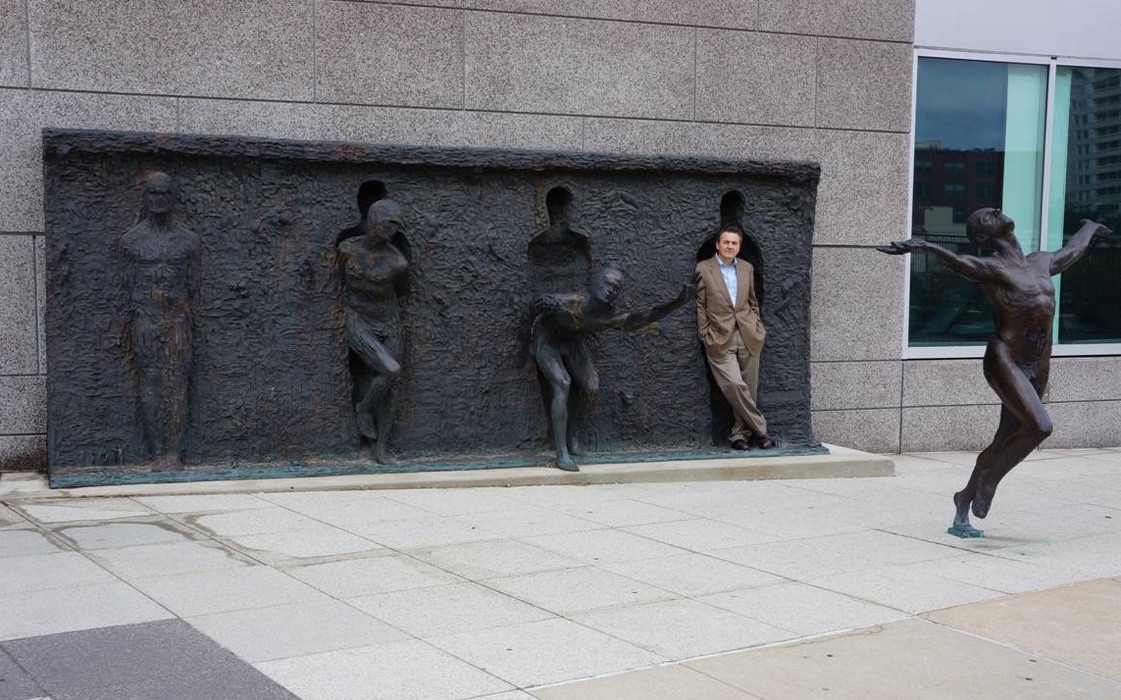
The above picture shows the Freedom Sculpture by an artist, Zenos Frudakis, who stated:

“I wanted to create a sculpture almost anyone, regardless of their background, could look at and instantly recognize that it is about the idea of struggling to break free. This sculpture is about the struggle for achievement of freedom through the creative process”.

Like it or not, we are all human, and part of that definition means that we are creatures whose existence is framed by emotion. Happy, sad, indifferent, scared, lonely, calm or agitated, and the list goes on. The very thing that we share, emotion, is also very unique to each person and experience. There is never a right or wrong feeling; only how we act on those emotions! When we pay attention, when we acknowledge our innermost emotions and give them expression, we are helping ourselves to expand and invite healing to come and dwell with us. That is often easier said than done, especially if we are struggling to ‘be strong’ to recover and heal from your cancer journey.

It is difficult to say what will help us as an individual to acknowledge and face our deepest emotions. There is no defined path; we must each find our own way. Our journeys, while sometimes similar to another’s, are unique. But just as we share these emotions, we can also share tools for coping. One such tool is suggested through art. Mediums such as music, visual art, poetry, literature, drama and nature can heighten our self-awareness and at times, even reach beyond to our unconscious to promote healing from within.

Catharsis is the process of releasing, and thereby providing relief from, strong or repressed emotions.

So allow yourself the time to make or enjoy art that touches you – e.g. listen to music, watch a movie, walk along the outdoor path. See the beauty of what surrounds you and allow it to gently nudge the emotions that dwell within you to the surface. Let the healing begin from within.

“I’m not sure whose story I have been telling. I’m not sure if it is mine, or if it’s some character’s I have yet to meet. I’m not sure of anything. All I know is that, at any moment, life will surprise me. It will bring me to my knees, and when it does, I will remind myself, I will remind myself that I am my father. And I am my father’s father. I am my mother. And I am my mother’s mother. And while it may be easy to wallow in the tragedies that shape our lives, and while it’s natural to focus on those unspeakable moments that bring us to our knees, we must remind ourselves that if we get up, if we take the story a little bit farther…if we go far enough, there’s love”.

                                                                               Excerpt from Life Itself.

Are You Searching Your Medical Symptoms on the Internet?

Are You Searching Your Medical Symptoms on the Internet?

As a cancer survivor, you may have lost trust in your body. When you notice things happening in your body, you may become concerned that it signals that your cancer has returned, or you have developed a new cancer or a treatment complication. You may turn to an internet search to research your symptoms, which may only further increase your level of concern and lack of sleep! You may not know when to reach out for help and which one of your multiple providers to call.

When educating my patients about the seemingly endless list of sign and symptoms of cancer recurrence, I prefer to avoid specifically identifying them. Instead, I advise my patients the following: if you should develop symptoms that are not acute (meaning life threatening or intense, i.e. a stroke, heart attack or an severe belly pain) and these non-acute symptoms last for one or two weeks, and these are either new symptoms or chronic ones that are different now, then it may be advisable to reach out to a provider whom you feel comfortable speaking with. Ideally, your cancer provider since they may be more skilled to evaluate whether it may or may not be related to cancer. This provider can advise you several things that usually translate to one of following messages:

  • This does not sound suspicious, please see your PCP for assessment and management.
  • This sounds a bit concerning. Why don’t we do some testing (like labs or scans) and have you come into the office to discuss the results.
  • Most commonly, you may be told that your symptom is real, but not yet specific enough to be diagnosed. In this case, you may be prescribed an empiric therapy such as medication to support your symptom(s) and be scheduled for a later reevaluation. Most commonly the symptom(s) will resolve and were therefore likely not related to cancer.

It is most important to remember that you are not alone! You are part of a team; you are the “monitor”, since you know best what is happening with your body. Your medical providers can help you make sense of your symptoms.

Optimize Bone Health and Reduce Fracture Risk

Optimize Bone Health and Reduce Fracture Risk

Cancer (treatments) may expedite the loss of bone mass and increase your fracture risk.

Calcium and Vitamin D are essential for bone health. Supplements may not be able to fully prevent fractures and may increase the risk for heart disease. Unless recommended/prescribed by your health care provider, and until we know more and understand better, your diet may be the preferred route to get (the bulk of) your daily Calcium/Vitamin D intake. The National Osteoporosis Foundation has created information on daily requirements and natural sources of Calcium and Vitamin D.

Your provider may recommend exercises (to prevent falls and/or strengthen your bone), a blood draw (to evaluate the need for a vitamin D boost), as well as a bone density test* (to evaluate the need for medications).

*Not to be confused with a nuclear bone scan used to detect cancer..

This site does not provide binding advice. Please communicate with your provider(s) before making any changes to your care plan. The content of this domain is protected. Entries and replies are not endorsements. Views are mine. No Conflict of Interest.